




The Considerate Explorer
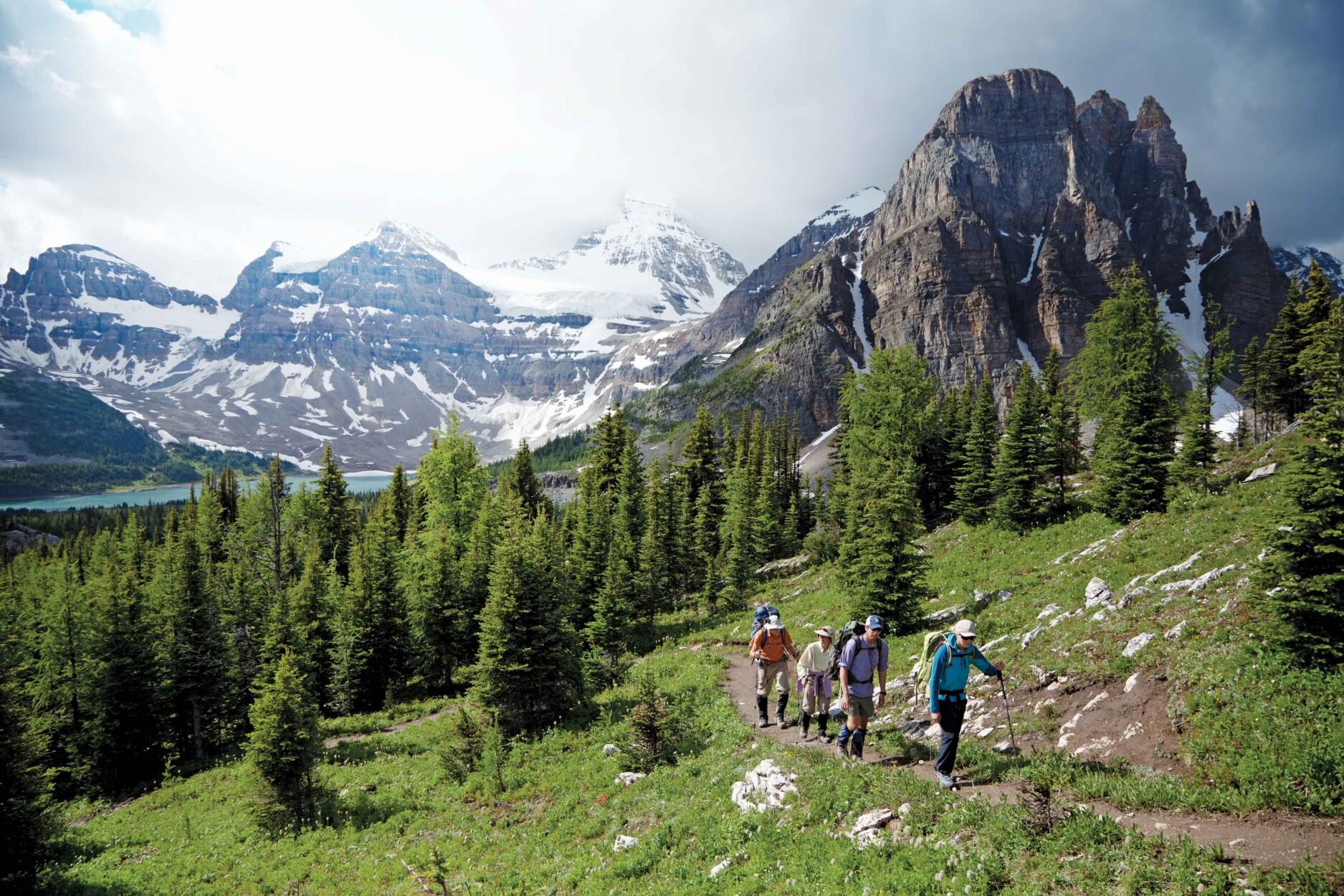
Staying on the trail helps protect the delicate alpine ecosystem. Photo by Travel Alberta / Yamnuska


We all love to spend time on the trails. Let’s work together with proper trail etiquette to make it an enjoyable experience for everyone.
We all come to the mountains to relax and reconnect with nature. There’s nothing like taking a deep breath of crisp mountain air, feeling the warmth of the morning sunshine on your face, and taking that first step into the unknown wilderne— wait, who’s music is that? Is someone seriously blasting ‘80s hair metal all the way out here?
Maybe we’re all looking for different mountain experiences, but that doesn’t mean we can’t treat one another with respect. Just because you enjoy it, doesn’t mean everyone else does. And there is so much room out here that we can all have the experience we’re looking for in the mountains. Here are our recommendations for how to be on your best behaviour, so we can all find joy exploring the trails of the Canadian Rockies.
Acknowledge Other Trail Users
Everyone enjoys the trails their own way. Whether it’s hikers, trail runners, mountain bikers, or equestrians, everyone is just looking to make the most of their time outdoors with the mode of transportation they prefer. Proper trail etiquette dictates there are general rules for how to pass one another safely on the trail: bikers yield to hikers and everyone yields to horses. But the truth of it is rarely so cut-and-dry.
Communication is key when encountering others on the trail. Talk to the other party about how best to pass. Maybe it makes sense for the hiker to get out of the way so the biker can carry on at a faster pace. Maybe a young horse is experiencing the mountains for the first time and the rider asks you to do something to increase that horse’s confidence. Maybe there isn’t a lot of room or there could even be wildlife causing a jam on the trail in a tight spot. Whatever the circumstance, start with a friendly “hello” and let the conversation go from there. With a little cooperation, everyone can enjoy the trails the way they please. You might even make a new friend along the way.
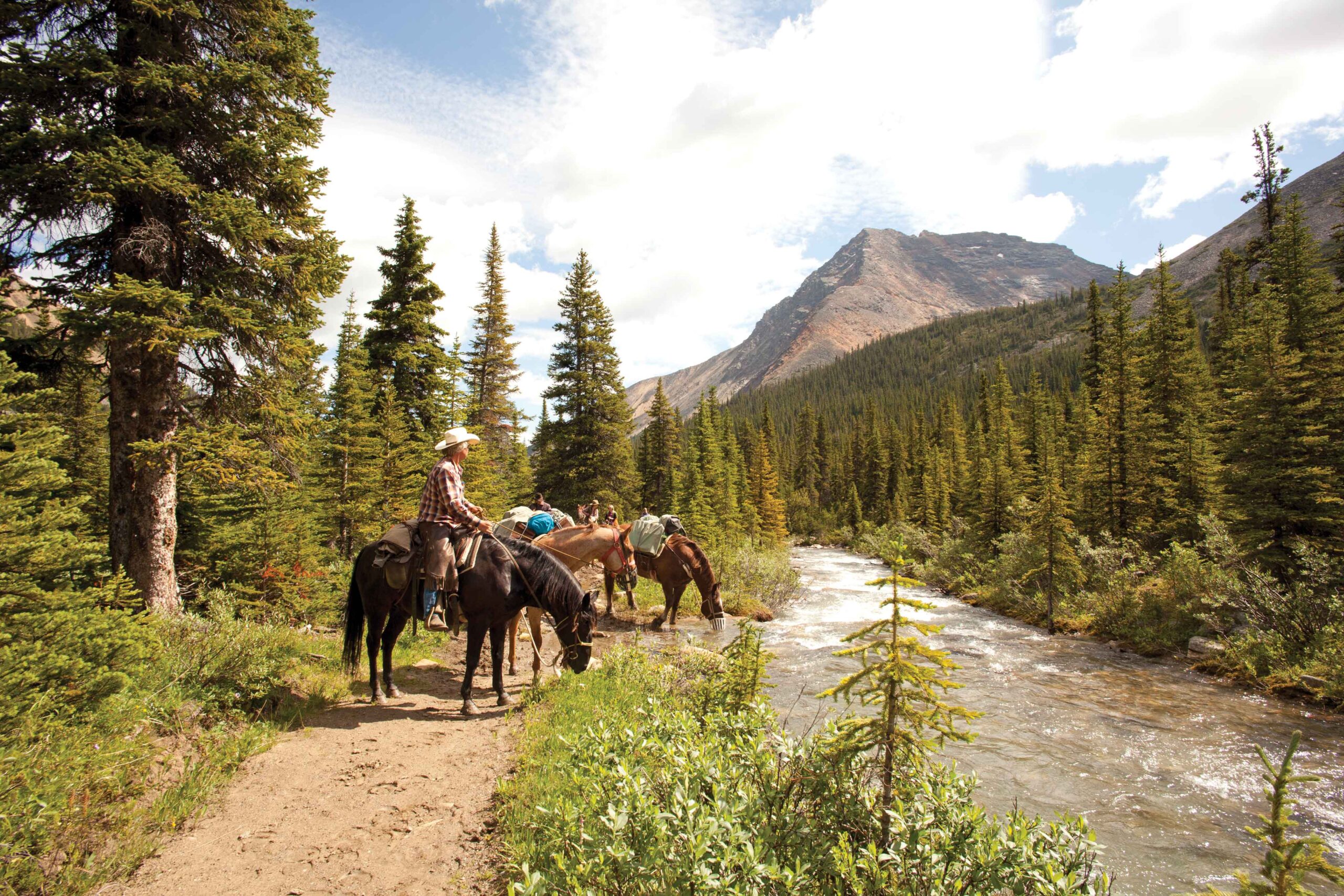
Talk to equestrians to figure out the best way to pass safely on the trail. Photo by Travel Alberta / Kathmandu
Maintain the Environment
The mountain landscape evokes images of power and strength, but it’s actually a delicate balance between life and scarce resources that are easily disturbed. Plants take a long time to grow in the Rockies because of the harsh conditions, high altitude, and long winters. It’s paramount to maintain the diversity in the ecosystem, especially as you’re out enjoying it.
Established trail etiquette dictates there are simple yet effective things you can do while enjoying a trail to maintain the environment around it. Start by staying on the trail itself. By following the designated path, you prevent braiding, which happens when new trails form alongside, and often intertwine with, the main trail. Braiding makes it harder for natural flora to survive. Not only could you be trampling fragile plants that are barely hanging on, but braiding can cause soil erosion, which can have a lasting effect on the ability of plantlife to grow in a given area.
Did you find something cool on your mountain adventure? A pair of antlers? A fascinating rock? Or even a pretty wildflower? Take a picture but leave the actual artefact. Parks Canada states, “Natural and cultural resources such as rocks, fossils, artefacts, horns, antlers, wildflowers, and nests are protected and must be left undisturbed for others to discover and enjoy.”
It’s not just a nice notion to leave these things be, it’s the law. All of these things are elements in a complex ecosystem and removing them can have lasting effects on the world around them. Invest in a good camera with a telephoto lens to get the shot you want while staying on the trail and leaving objects in their natural environment. This makes it so everyone can enjoy, and you still have your special memory in a photograph.
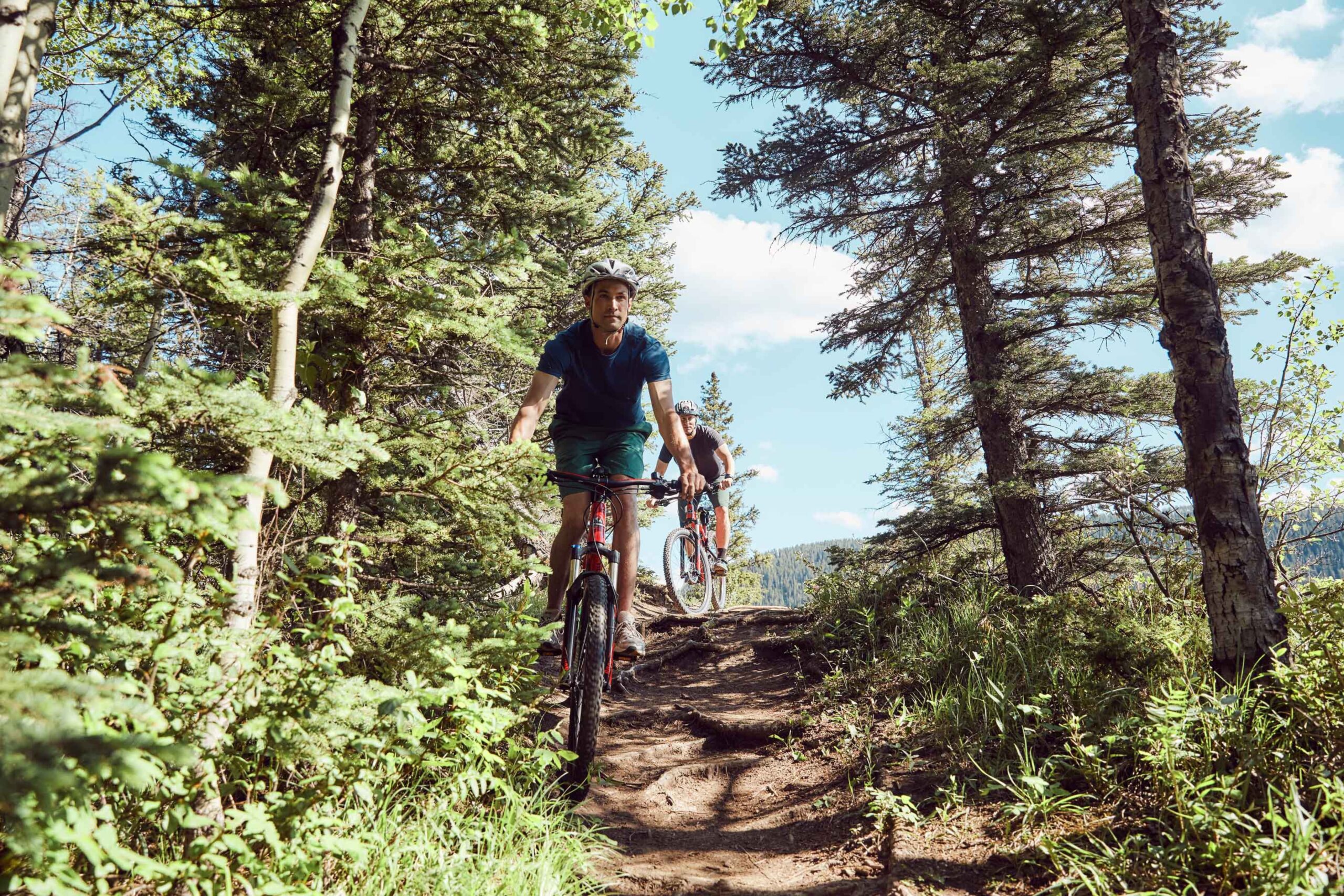
Biking is a fast way to explore the trails, keep an eye out for slower trail users and be prepared to communicate the best way to safely pass on the trail. Photo by Travel Alberta / Colin Way
Respect Wildlife
The mountains are a magical location to visit, but they’re also home to many species of wildlife. You want to be a good houseguest! The most important thing you can do for wildlife is give them space. If a wild animal looks at you, changes direction, or otherwise reacts to your presence, you are too close. Recent research suggests even staying on the trail can affect large predators such as bears and wolves for over half a kilometre away. These animals are sensitive to our movements through their landscapes, and we want to do our best to minimize impact.
The safest way to explore the mountain trails is in a group of four or more. Chat amongst each other while travelling along the trail to alert wildlife to your presence and avoid any surprise encounters. Many animals are active at dawn and dusk, so enjoy a good breakfast before heading out in the daylight to give animals time to move undisturbed, and make sure to pack it in before the sun starts to set. Some areas in the national parks require groups of four during select times of the year. These areas are prime grizzly territory, and this restriction is for the safety of everyone involved – including the bears!
If you’re travelling with your pet, keep them on leash. Studies have shown that off-leash dogs are one of the most common causes of wildlife attacks. Dogs can appear as coyotes or wolves to other wild animals, and they can disturb wildlife by chasing them or aggravating them and drawing them back to you. Drones and other UAV devices are prohibited in national parks and provincial parks including throughout Kananaskis Country. There are hefty fines for flying a drone in these areas, so leave it at home and enjoy the sounds of nature instead.
As a last resort, bear spray is an effective deterrent for wildlife attacks. Keep your bear spray in an accessible location on your body – not in your backpack! Know how to use it, and be prepared to pull it out necessary.
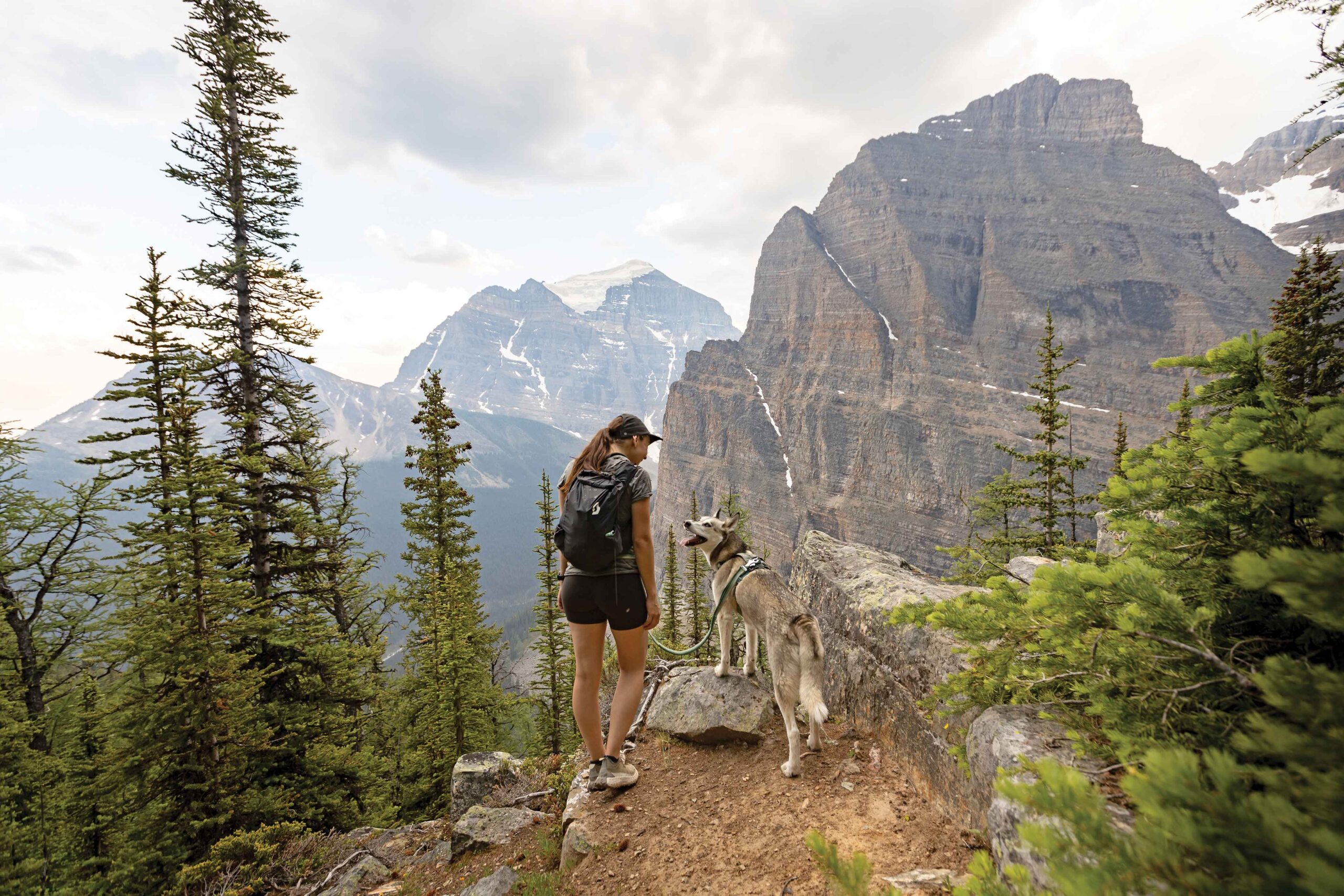
Keeping dogs on leash is proper trail etiquette. It's also for safety: off leash dogs are one of the leading causes of wildlife attacks in the mountains. Photo by Travel Alberta / Katie Goldie
At the end of the day, we’re all drawn to the mountains for their beauty and the rich adventures they promise. With a little effort and consideration, and some basic understanding of trail etiquette, we can all get along and enjoy this wonderful landscape and help preserve it for generations to come. We hope you have a fantastic time visiting the Canadian Rockies this summer, and we’ll see you on the trails.
Extra: When Nature Calls...
Most of the trailheads, campgrounds, backcountry campsites, and day use areas throughout the national and provincial parks have outhouse facilities. Please use them, and be respectful about others who need to use them after you.
Please pick up after your pets! Doggy doo can contain parasites that can make humans and many types of animals sick. It is not a natural part of the ecosystem. Please pick up after you pooch and pack it out with your garbage.
Equestrians aren’t required to clean up after their horses on trails where they are permitted to ride. While this may come as a surprise to some, horse manure is mostly grass, and it doesn’t contain parasites that can make people or wildlife sick. It breaks down in a matter of days and it even provides nutrients to the soil. Equestrians are expected to clean up at busy areas, such as trailheads and rest stops.