




Horsin’ Around in the Rockies
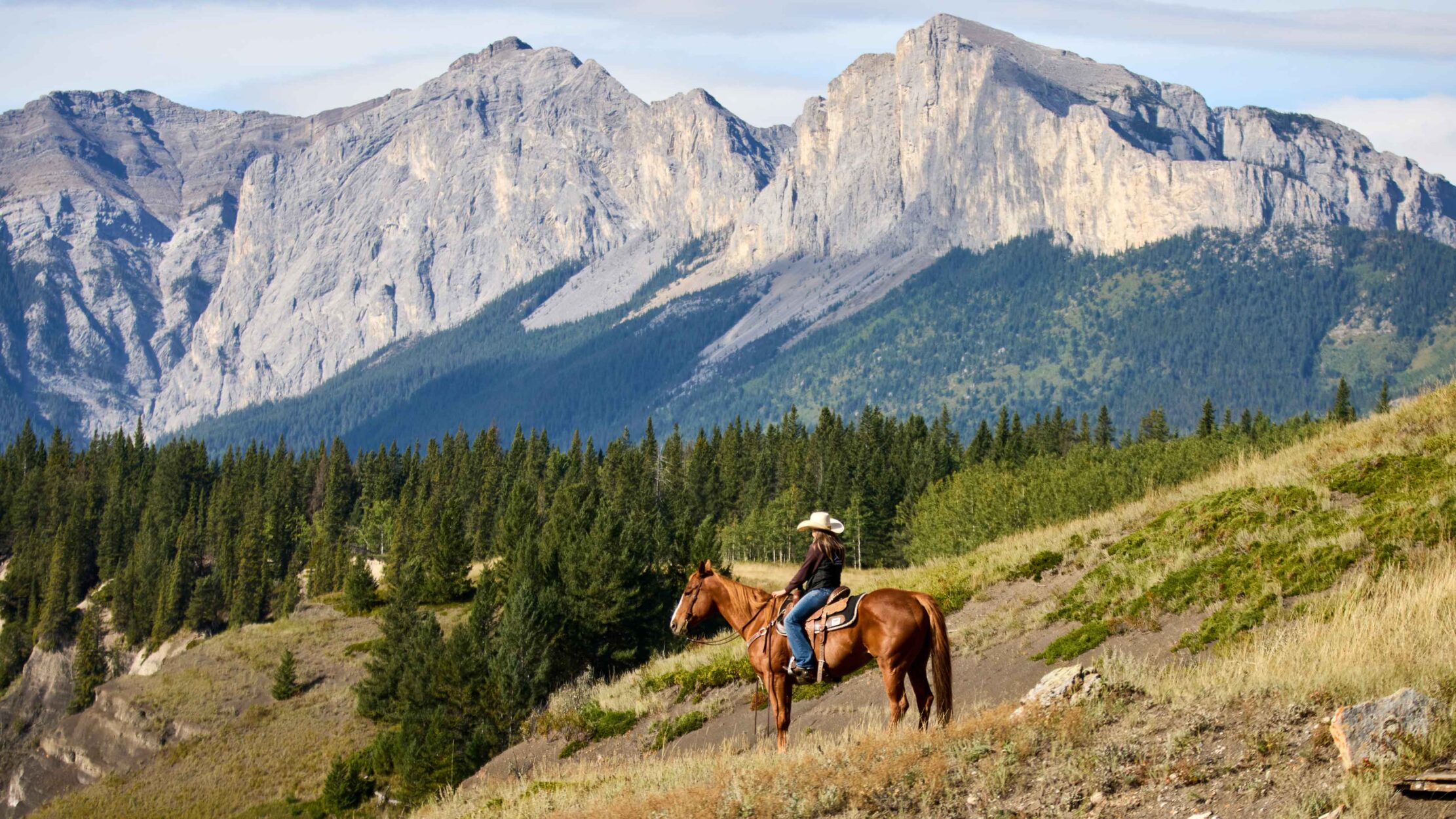
Travel Alberta / Colin Way @colinwayphoto


Nothing beats playing in the mountains on the back of a horse. Mountain scenery is always better when it’s framed between two ears, and getting to experience this place horseback is a dream for so many people. If you don’t have horses (even if you’ve never ridden before!) there are plenty of excellent outfitters who are more than happy to show you the ropes. We wrote about them here. If you have experience but don't have horses of your own in the mountains, check out Rafter 6 in Kananaskis. They offer rides from beginners to advanced to give you a true mountain experience.
But if you’ve got the means, and you’re looking to ride the trails DIY style, then this article is for you. Here are some things to know about horseback riding in the mountains.
Step 1: Get Oriented
There are so many incredible trails to ride in the Canadian Rockies. There are out-and-backs that can get you home for the afternoon, day rides that will leave you exhausted but happy as you fall asleep in your own bed, camping options for overnight stays, and pack routes that take days through the backcountry for a true taste of the west. Your options are – almost – endless.
There are also trails where horses aren’t permitted, and it’s up to you to know before you go. Furthermore, there are seasonal closures that can affect certain trails at certain times of year. These closures often have to do with wildlife migration patterns, safety, or just general trail upkeep. Your chosen trail may also be closed suddenly because of wildlife activity. These closures are unpredictable, but you don’t want to disturb a momma grizzly chowing down and defending her cubs next to a trail.
Trailheads can also be busy, depending on where you want to go. It’s best to have a backup plan in case the parking lot you want to access is full.
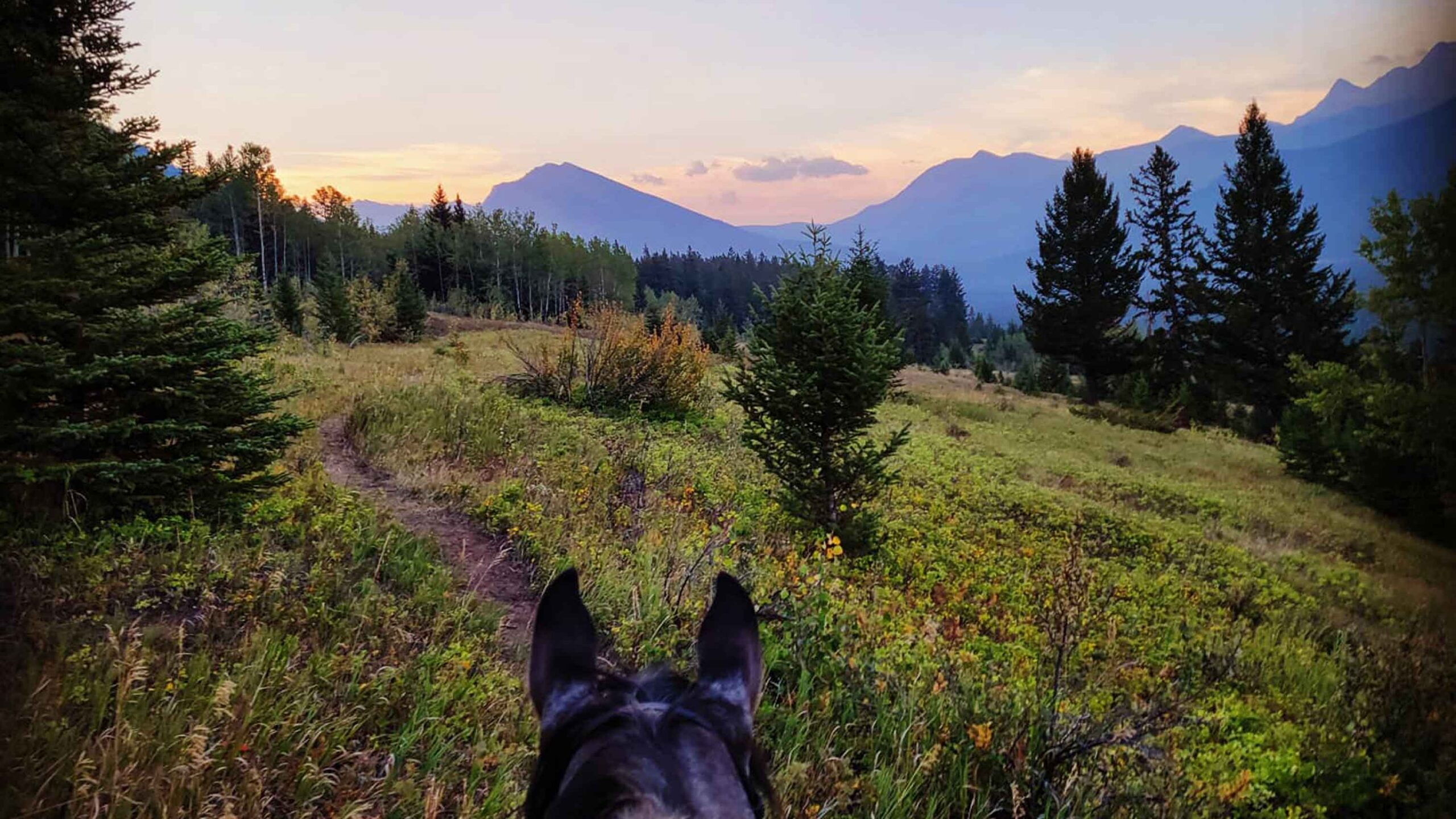
There are so many fantastic trails to ride in the Canadian Rockies
There are plenty of resources to get you started. Parks Canada has excellent information for riding in Banff and Jasper National Parks. Kananaskis Country is a bit less structured because it’s made up of provincial parks, provincial wildland areas, public land use zones, and private lands. Alberta Parks does a decent job at providing information. Although it’s dated (before the 2013 floods that changed much of the landscape), the book Alberta Backcountry Equestrian One-Day Trail Guide by Pam Asheton is still a well-used resource. Be aware there are grazing leases in certain areas of K-Country, so it’s possible to run into free-roaming cattle. There are wild horses around the Elbow Valley region as well, and running into a stallion might add some unwanted spice to your ride.
Step 2: Plan It Out
If you’re camping with your horses, you’ll need to do a fair bit of planning. Know where you can and can’t camp and make sure you have the proper permits. There’s nothing worse than planning a weekend away but finding out you don’t have the required documents. For the national parks, you need a parks pass. (Note: At the time of this article, the Canada Strong Pass means National Parks are free until September). In Kananaskis Country, a Conservation Pass is required for parked vehicles. Make sure you include your trailer on your registration so you don’t end up with an unnecessary ticket.
You’ll want to plan things like hay, grain, supplements, and water. Most front-country campsites offer water, but if your horse is a picky drinker, you might want to bring some from home. You can also try flavouring the water at home with electrolytes, apple cider vinegar, or other options, but make sure your horse is used to this before you go. The majority of places have rivers or creeks nearby. It might be a good idea to test your horse on a mountain ride before a full-fledged camping trip to make sure they are comfortable drinking from flowing water. In my experience, they tend to figure it out pretty quickly.
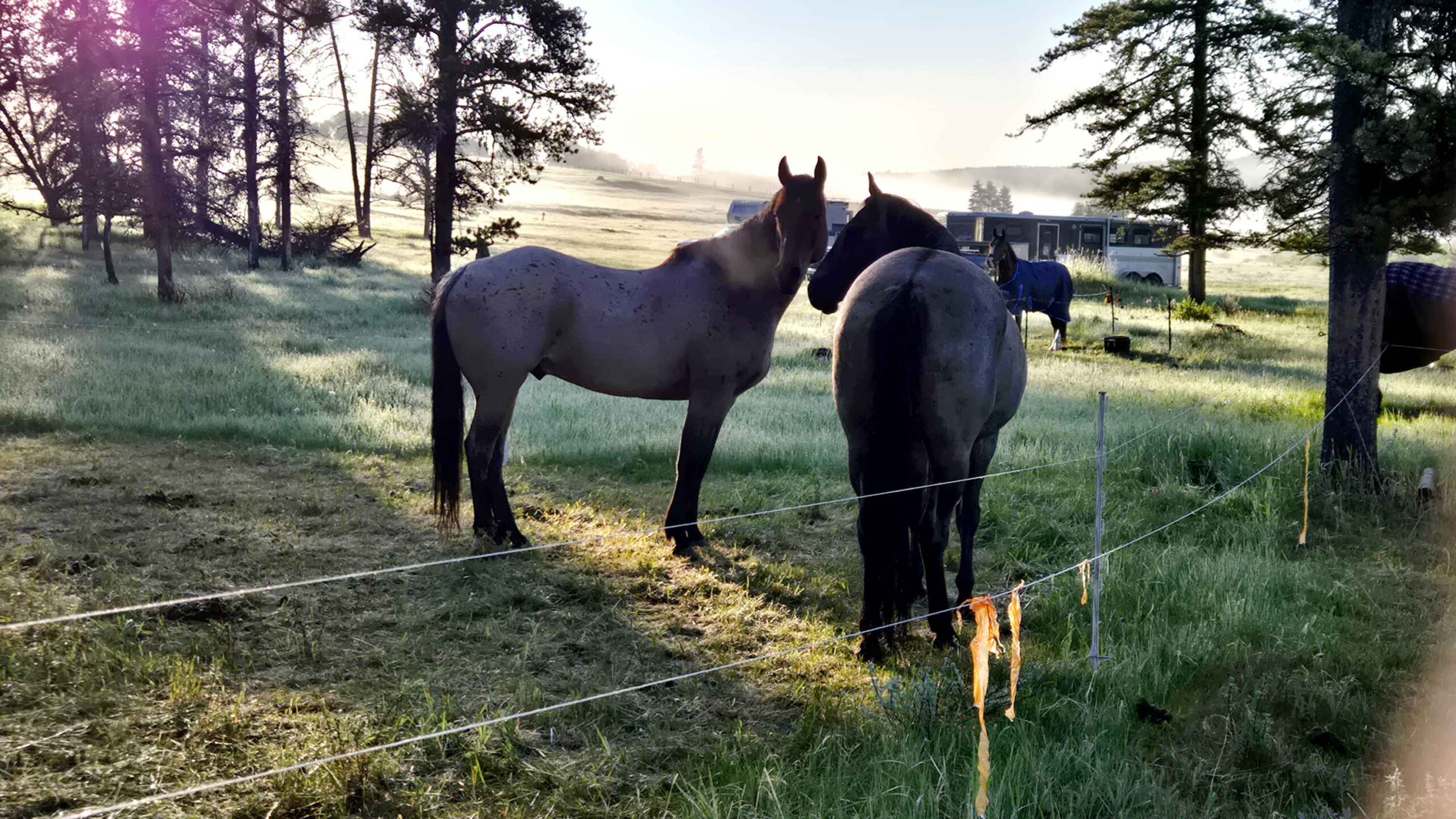
An electric fence is a great option where permitted. It's cheap, portable, and allows the horses natural movement overnight. Other common options include highlining and tie stalls.
Some campsites have tie stalls. We wrote about a camping trip to Little Elbow and our experience with those. In those cases, horses are expected to stand in the stalls when they’re not being ridden. Make sure to bring some kind of disinfectant to use before and after your stay. You don’t know who was using the tie stall before you or what they might be carrying.
Other camping areas allow electric fencing or panels, while some are highline only. Find out what you can and cannot use before heading out and take the time to train your horse appropriately. That way, they won't be surprised with a completely new setup at bedtime. A little preparation can go a long way for comfort and for safety when in the mountains.
Step 3: Get Ready
A long day in the saddle makes great memories, but only if you’re ready for it. Beyond the general mountain preparedness, getting ready to adventure with horses requires a few extra considerations.
Make sure both you and your horse are in shape. There’s a difference between an hour lesson and spending six hours in the saddle on a trail ride, day after day. If you’re fit and your horse is fit, you will both enjoy this experience. If not, you’ll both come home sore and sour. Start with some easier rides and progress to longer day rides before committing to a camping or packing trip. Both you and your horse will gain valuable experience about traversing mountain terrain – including rivers, bridges, rocky trails, steep slopes, and other trail users.
You will also need foot protection for your horse, whether that’s shoes or well-fitting boots. The Rocky Mountains got their name for a reason! The sharp, jagged limestone of the mountains does a number on barefoot horses, and it’s not worth risking lameness for the price of some footwear.
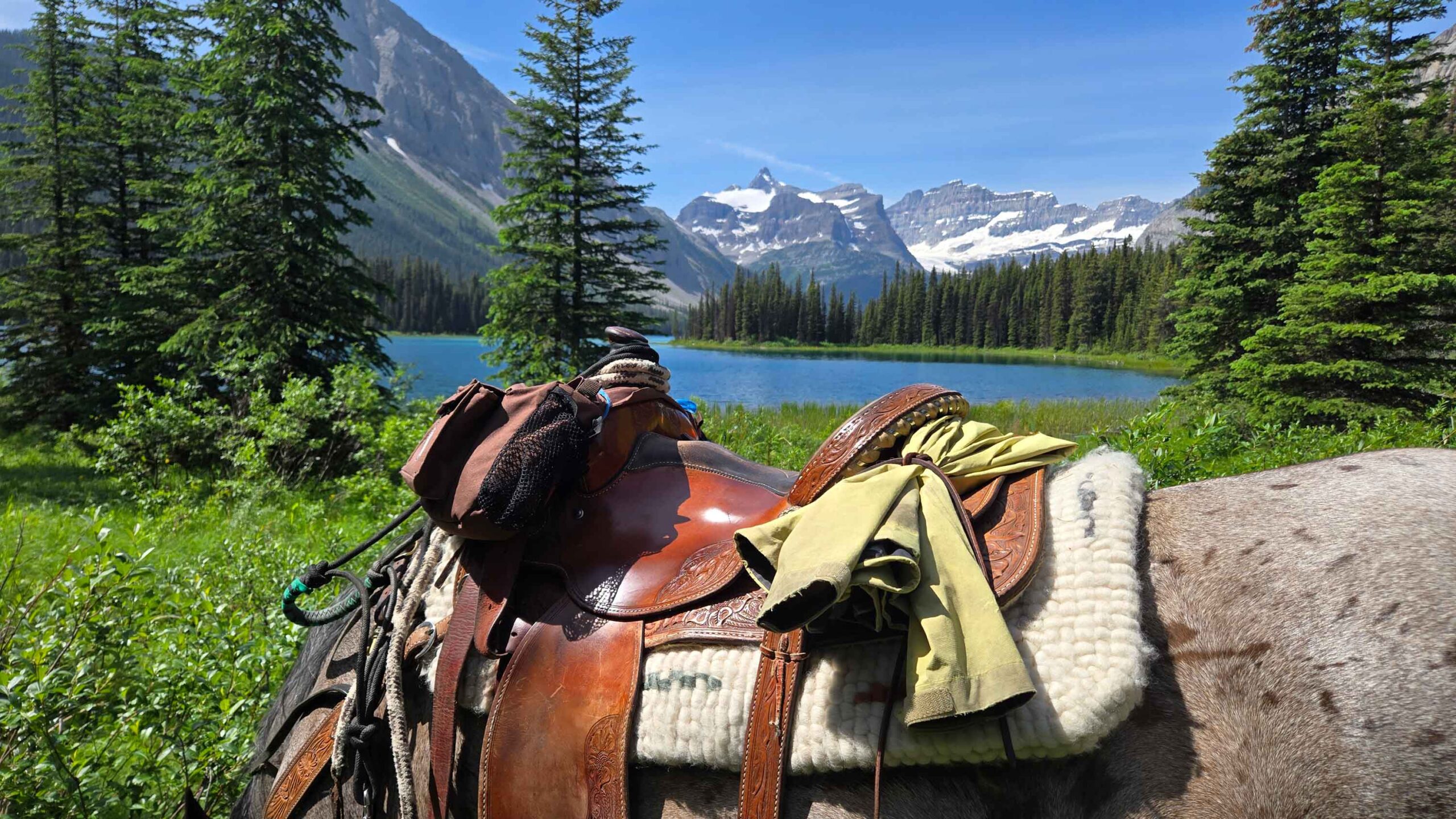
Tack that fits you and your horse properly is the difference between a great day and a miserable one.
Take some time to check your tack before heading out. Everything should fit you and your horse, and it should be gear you’re both comfortable using. This is not the time for trying something new – you want to make sure you both have clear lines of communication before hitting the mountain trails. If things get a little western, you don’t want to be figuring out the latest tack trend or trying out a new saddle. This goes for your truck and trailer too. The mountain roads can be steep, and possibly unpaved. Make sure your setup is in good working order to avoid a breakdown on the road.
Despite your best efforts, sometimes things go sideways. Before you head out, tell your emergency contacts where you are going and when you expect to return. A satellite communicator goes a long way too for safety. There are lots of options on the market, so do some digging and find out what works best for you.
Step 4: Let’s Go!
You’ve got everything prepared, you know where you’re going to go, and you’re ready to hit the trail! We did an entire article on trail etiquette that includes horseback riders, but the Coles Notes are:
- Be kind to other users. Yes, everyone should yield to horses, but that’s not always practical. Make sure to communicate with everyone and be friendly! Depending on the situation, it might make more sense for you to get out of the way and let a faster-moving cyclist pass, or it maybe makes sense to stop and assess a situation that hikers can pass through easily. Communication is key.
- Be courteous at trailheads and common areas. Keep the place clean and do your best to park respectfully. You also want to consider your exit strategy when parking at busier trailheads. Most people don’t realize how much room you need to load horses after a ride and are perfectly happy blocking you in. Having an exit strategy helps so you can pull ahead if you need more space.
- Stay on the trail. Weaving to avoid mud or other debris causes all kinds of problems like erosion and poor drainage. It can also destroy sensitive plantlife by stomping all over it. If you stay on the trail, you’ll help preserve this area for other trail users for a long, long time.
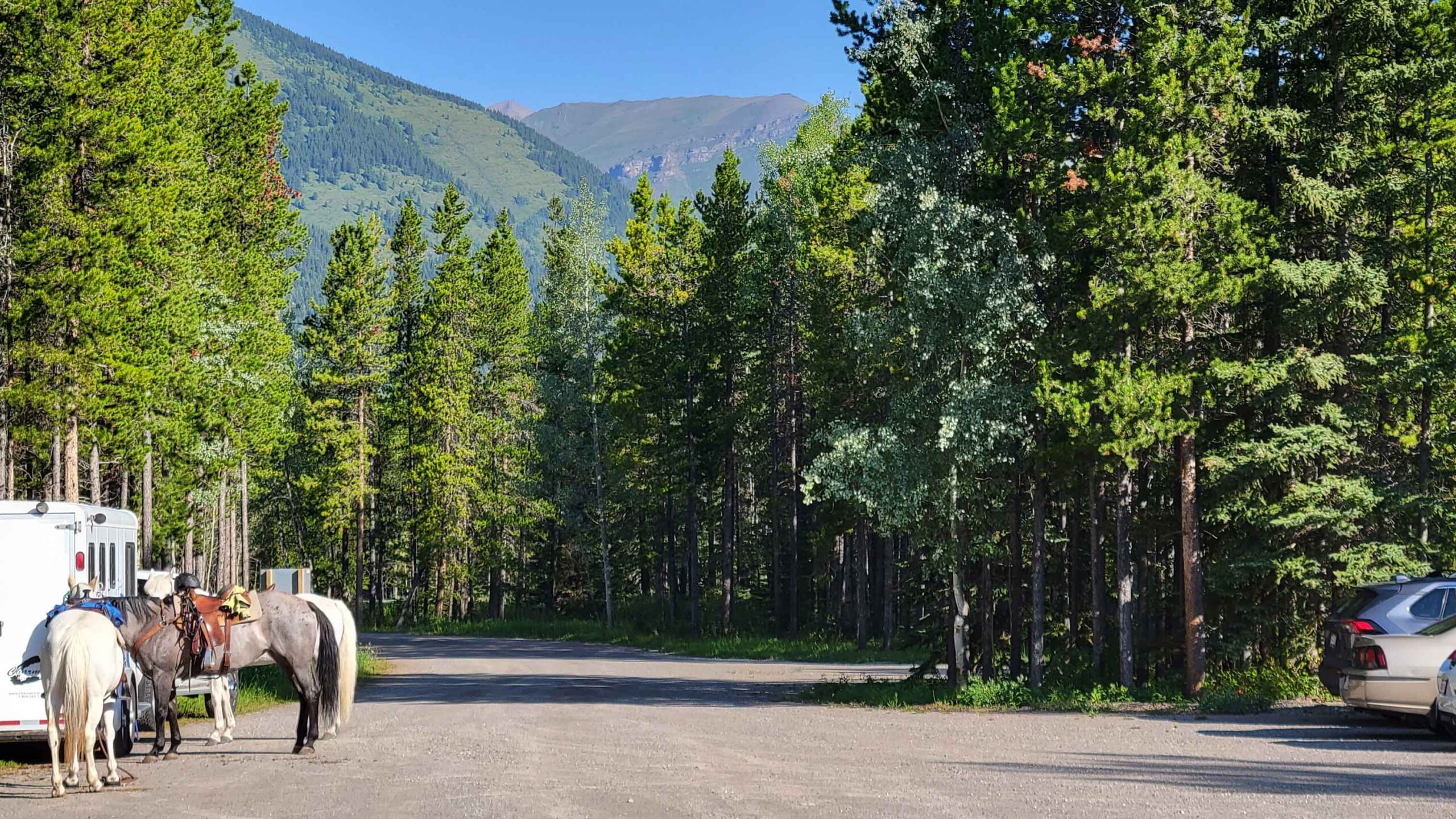
Be respectful at the trailhead and clean up after your horses. It's a good idea to park away from other vehicles, if possible, and have an exit strategy in mind in case someone parks too close to the back of your trailer.
And don’t forget to have fun! The Canadian Rockies are stunning, and they’re an awesome place to ride. The majority of the trails don’t have motorized vehicles, so it’s a great place to get the horses out along routes that have been used for centuries. With so many areas to explore, and jaw-dropping scenery everywhere you look, there’s no better place to ride than in the mountains.
See you on the trails.