




Keep Your Distance, Keep Them Safe: Wildlife Safety in Waterton Lakes National Park
Photos Provided by Parks Canada


One of the highlights of visiting Waterton Lakes National Park is the opportunity to see wildlife in their natural habitat. Bears, deer, elk, and bighorn sheep are just a few of the critters you may be lucky enough to see during your visit. However, while recreating in the park, it’s important we all do what we can to keep animals and people safe.
Ryan Peruniak is a Parks Canada wildlife expert. He’s been observing human-wildlife coexistence in Waterton Lakes for more than a decade. Peruniak says that habituation to humans and human activity can have many negative impacts on wildlife.
“When animals become comfortable around humans, they lose their natural instinct to avoid us. This can lead to unsafe interactions for wildlife and visitors,” said Peruniak.
While visiting Waterton Lakes National Park it may be tempting to get up close and personal with wildlife, but this can be extremely dangerous. One of the best ways to prevent unsafe situations is to simply give wildlife their space.
How close is too close?
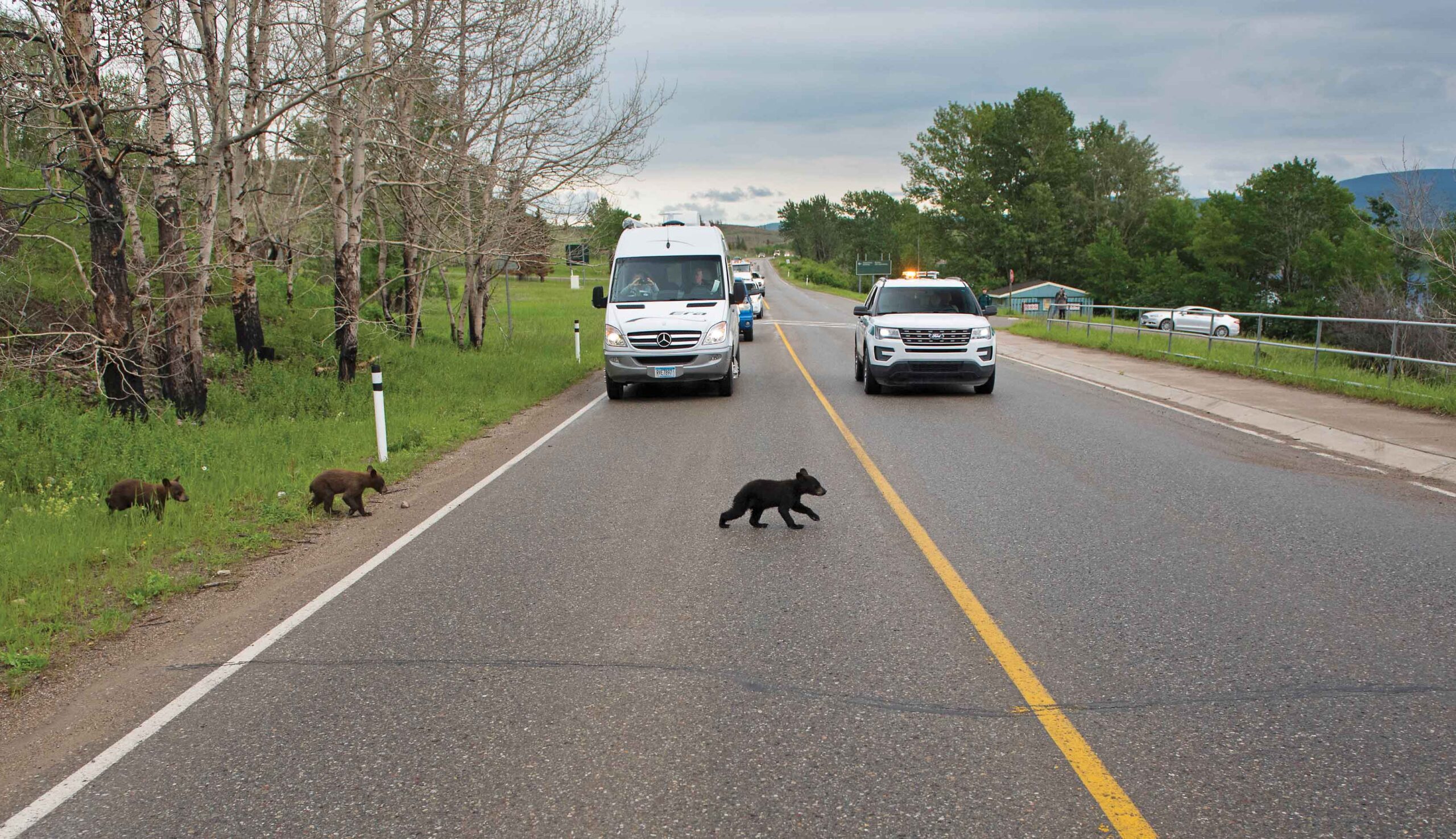
Parks Canada recommends keeping a distance of at least 30 metres away from ungulates, like deer and elk, and keeping a minimum of at least 100 metres distance away from predators like bears and cougars. One hundred metres is approximately 10 bus lengths, or 325 feet.
Preventing wildlife from feeling threatened or disturbed is essential. If you ever come across a wild animal that looks agitated it’s important that you attempt to safety remove yourself or your group immediately from the area. Peruniak says different species show signs of agitation in different ways but here are some things to look out for.
“If an animal is huffing, yawning, pawing, stamping its feet or flattening its ears, it’s usually a sign that it’s being made uncomfortable by your presence,” said Peruniak.
Keep traffic moving – reduce “bear jams”
Seeing a bear in the wild is one of the most sought after experiences in our national parks. Waterton Lakes is home to grizzly bear and black bear populations, and if you’re visiting in the spring, summer or early fall there’s a possibility you could spot a bear. This rare privilege comes with the responsibility of minimizing the impact of your viewing activities.
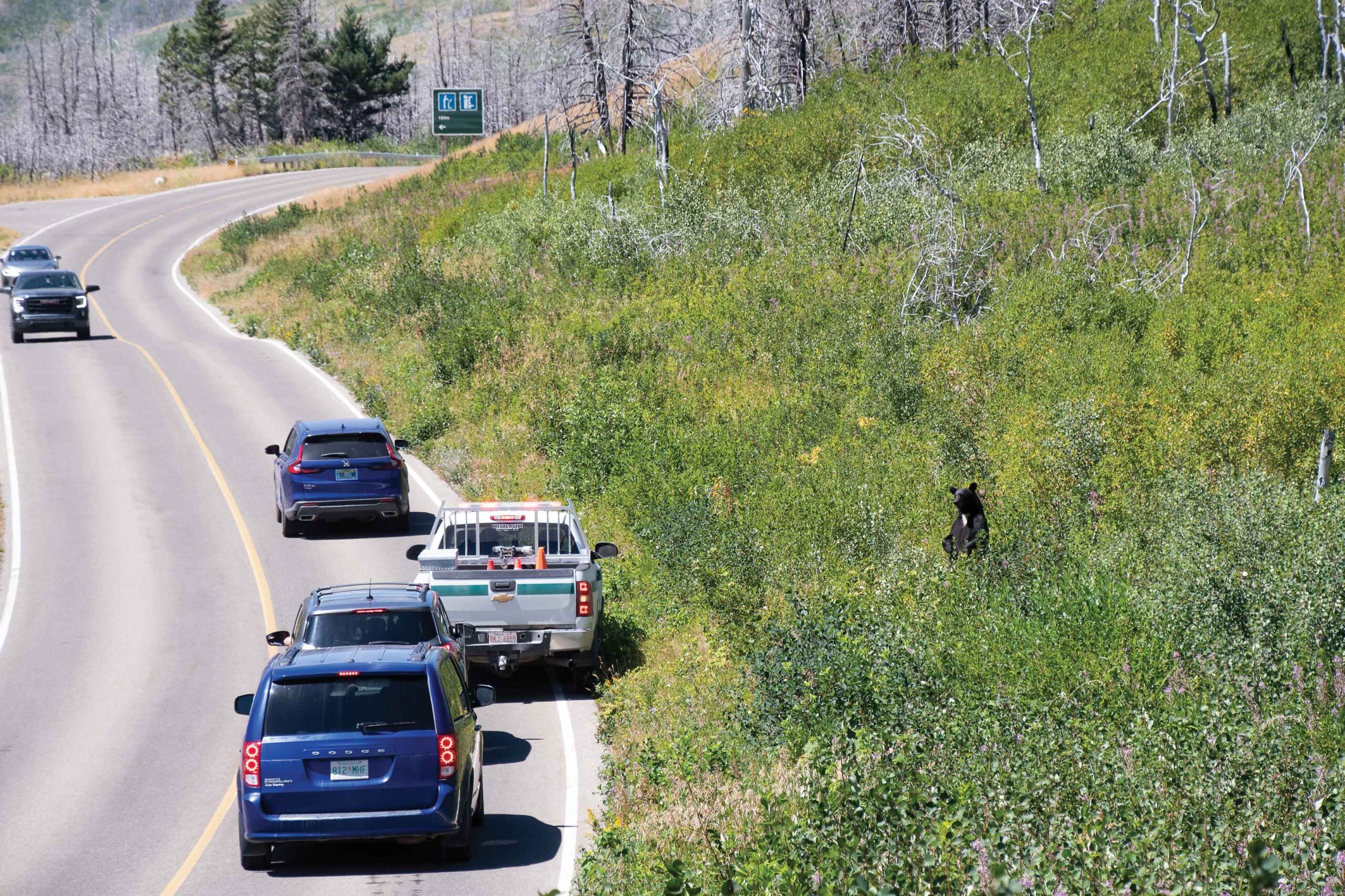
When driving, stay in your vehicle when you see an animal. The best approach is to drive slowly by, without stopping. Waterton Lakes’ wildlife expert, Ryan Peruniak, has this to say: “Bears need to accumulate enough fat reserves to survive the upcoming winter, and cars stopping can disrupt their feeding habits.”
If you do stop, turn on your hazard lights and pull well onto the shoulder. Remember that other cars and emergency vehicles need to be able to get past. Do not get out of your vehicle and approach the animal. Trying to get a great photo? Use your zoom or a telephoto lens. If you cause an animal to move, that means you are too close!
Photos Provided by Parks Canada
Human and wildlife safety is of the utmost importance to Parks Canada. Parks Canada takes action to promote coexistence between people and wildlife to ensure the safety of both.
In the summer of 2024, several bears were unfortunate enough to receive a food reward from an unattended picnic. When bears (and other animals) figure out that human food is tasty and easy to get, they start to become unafraid and will continue to approach people. To protect wildlife, never leave food unattended, even for a minute. Put all your food and scented items like coolers, pet food, garbage and dishes, inside your vehicle when you are more than an arm’s length away.
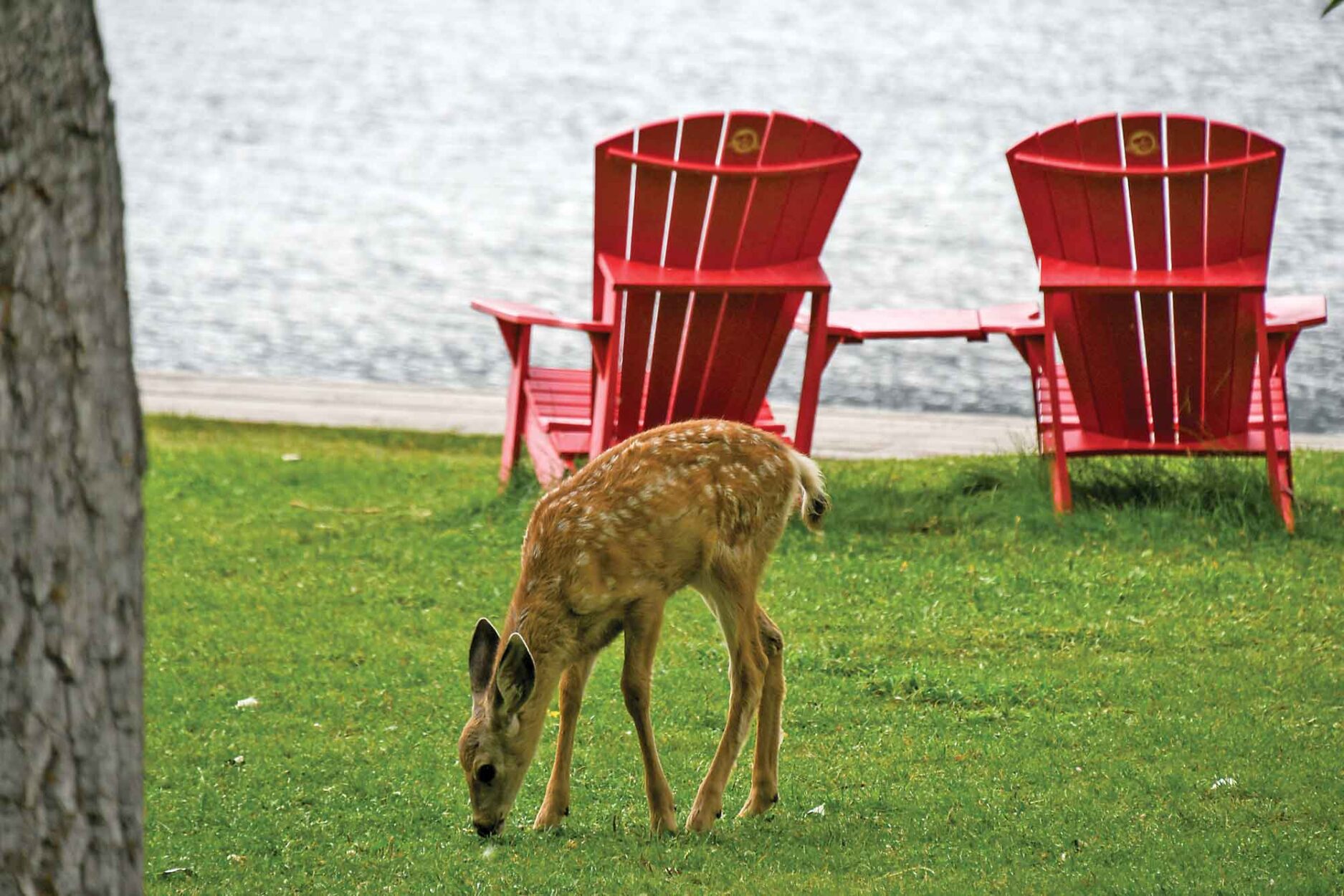
You may notice a lot of mule deer hanging around the village. They like to raise their fawns where there is some protection from predators, and Waterton’s quiet streets seem like a great option for those moms! However, the does can get protective of their young, and may attack if they feel threatened—so keep your distance. It is also important to keep your dog on a leash and away from the deer, as they could view your family pet as a predator.
Stay informed
While in Waterton Lakes it’s likely you’ll see wildlife when you’re hiking. Just like humans, animals often use parts of the Waterton Lakes trail network to move through the landscape. No matter your level of outdoor experience you can keep yourself and wildlife safe by doing the following:
Learn about the wildlife in Waterton Lakes National Park. A great resource for this is the Parks Canada website:
www.pc.gc.ca/waterton
- Always carry bear spray, ensure it is easily accessible and know how to use it.
- Make noise by talking loudly or clapping your hands. Bear bells are not effective.
- Don’t leave food, or your backpack with food in it, unattended at any time.
- Consider hiking in groups of four or more.
- Always keep your dog on a leash or leave them at home.
- Give wildlife space! Move off the trail if necessary to give them enough room to pass you.
Whether it’s your first visit to Waterton Lakes, or you have been coming here forever, consider visiting the Waterton Lakes Visitor Centre. The facility is open seven days a week (except for Christmas Day). It has interactive exhibits showing many of the animals in the park. While at the centre, you can check for area closures or warnings and get up-to-date information about recent wildlife sightings. If you see a problem (garbage overflowing, picnic unattended, bear in the townsite, aggressive deer, etc.) please let a Parks Canada staff member know! You can also call 1-888-927-3367 at any time.
Photos Provided by Parks Canada
Keeping wildlife safe is a shared responsibility. Help keep the wild in wildlife by giving them space, and never leaving food unattended—even for a minute! Getting to see a wild animal is an amazing experience, and one of the highlights of visiting Waterton Lakes National Park. Let’s all do our part to protect these beautiful creatures!
- Stay safe by staying inside your vehicle when viewing wildlife.
- Remember to drive safely and obey the speed limit.
- If you see a deer in the townsite, make sure to give it space.
- Stop by our visitor centre if you have any questions or concerns.