




Ghost Town in the Rockies: Visiting Lower Bankhead


Did you know that Banff has its very own ghost town? Just minutes from the bustling townsite are the remains of Lower Bankhead, once a booming coal mining operation. Now, all that remains are concrete foundations and several artefacts that are slowly being reclaimed by the power of nature. There is a short, interpretative walk that tells the story of this coal mining town and its short-lived glory.
In 1903, the Canadian Pacific Railway (CPR) opened the Bankhead Mine because it needed coal to power the trains as they crossed Canada on the newly finished rail lines. The coal under Cascade Mountain was excellent in supply and quality, but it was tough to extract. By 1911, the Bankhead Mine was processing 500,000 tons of coal with 450 people working in the mine. The nearby town, also called Bankhead, became a great place to live in the mountains.
At its peak, Bankhead was home to about 900 people and it was considerably bigger than nearby Banff. It had all the features of home from comfortable houses with running water and electricity to tennis courts for recreation. Despite the mine work being hard and dangerous, residents had fond memories of living in Bankhead.
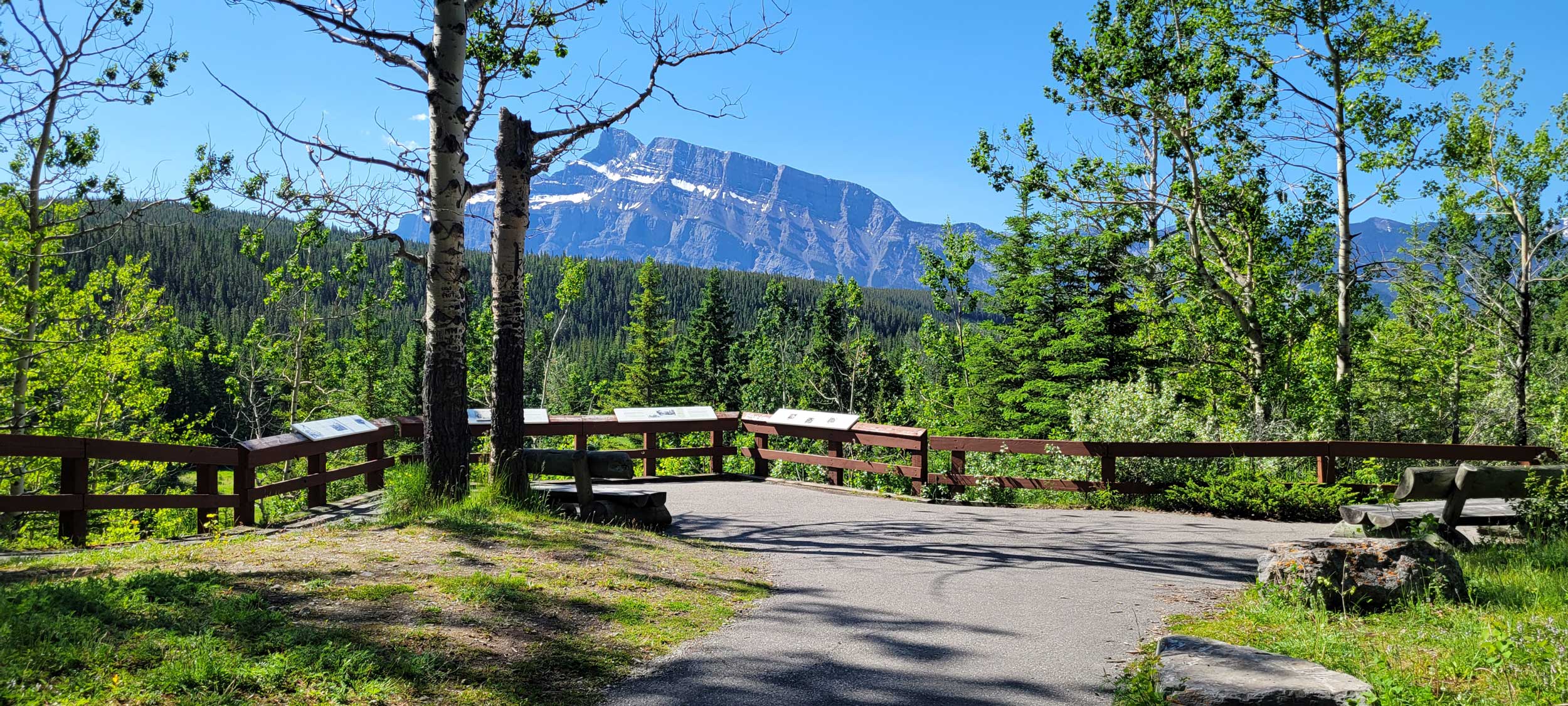
The trailhead to Lower Bankhead has interpretative signs telling the story of the coal mining town with personal anecdotes from people who lived here.
The mine began declining in productivity just as costs were increasing and demand for coal was decreasing. This led to the closing of the mine and, ultimately, the end of the town itself. The mine closed in 1922, and the government ordered the entire town to be removed to reflect the conservation ethics that were evolving with the new idea of the National Park. By 1930, the National Parks Act meant resource extraction like logging and mining were no longer allowed within Canadian National Parks.
Most of the buildings in Bankhead were moved to either Banff, Canmore, or Calgary. The rest were destroyed. The town where the majority of people lived has very little left. There is a picnic site at Upper Bankhead and a trail that winds around the upper mine operations. Lower Bankhead, however, where the industrial operations took place, still lives on as a ghost town in the mountains, and it has many stories to tell.
The interpretative trail starts with a steep set of stairs that lead down beside the old mine entrance. The actual tunnel entrance was sealed by blasting long ago, but you can still see where miners would have entered the impressive face of the mountain.
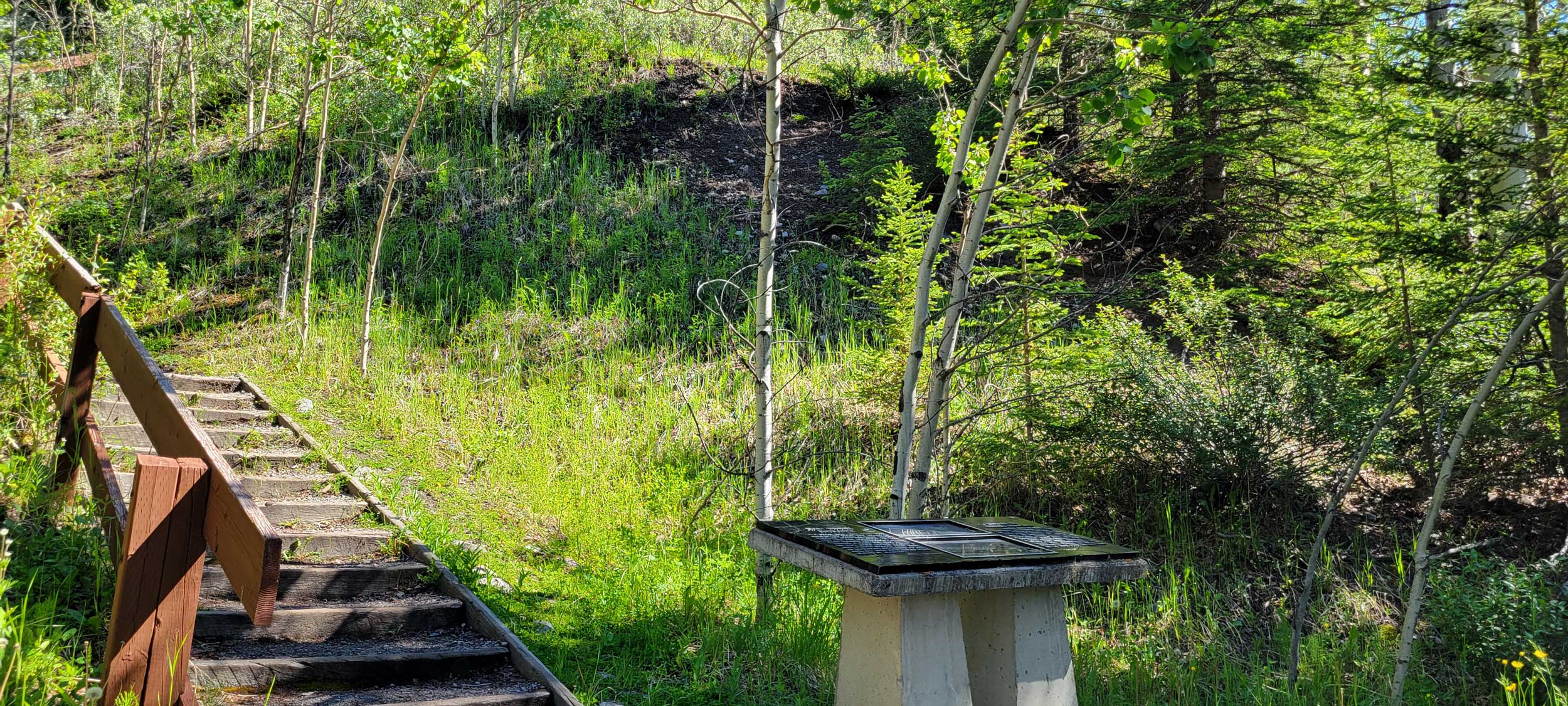
The entrance to the Lower Bankhead trail includes stairs and the long-since sealed entrance to one of the mine tunnels.
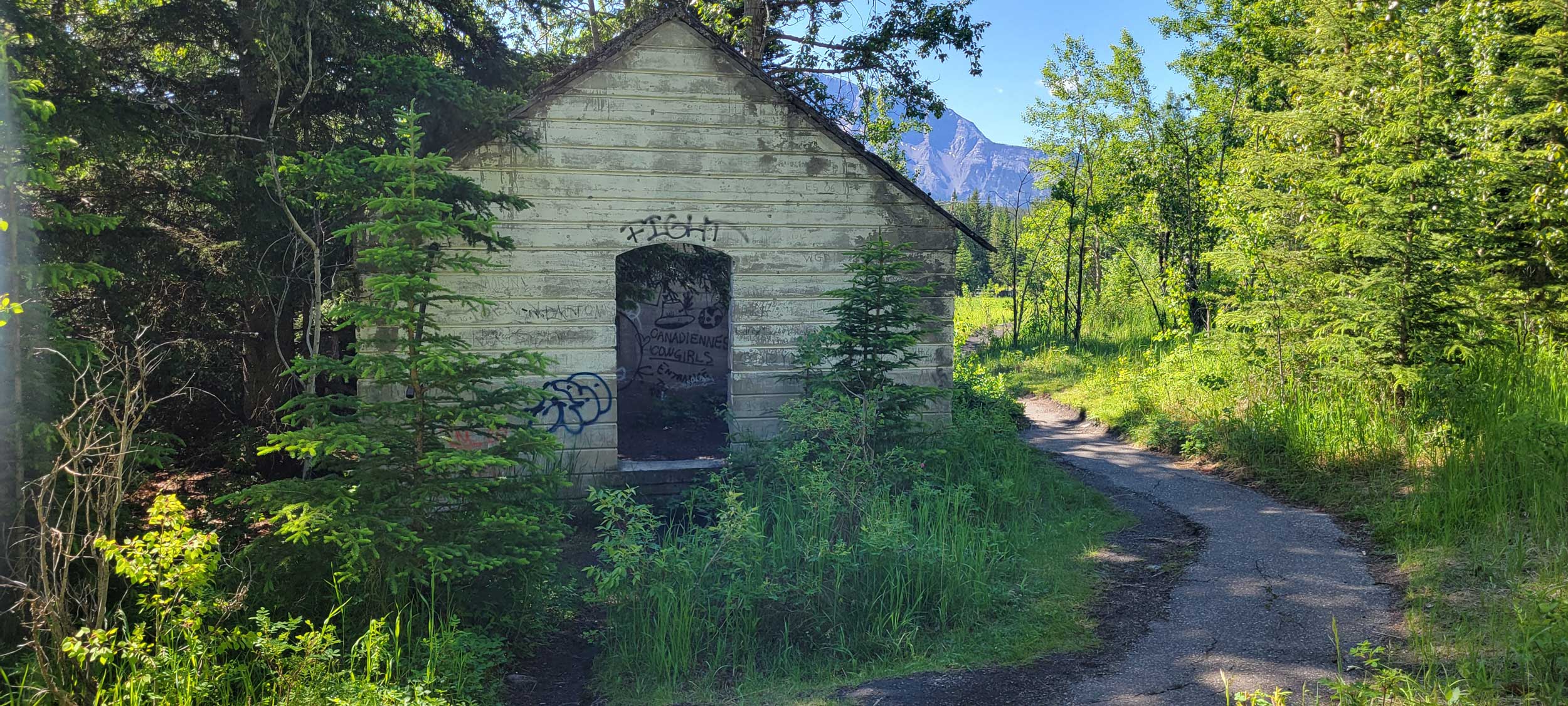
The first building that greets you on the tour is the lamp house. The remains of the building still resemble it’s former self, although graffiti and trees have taken residence on and around the walls. It seems like the place of childhood stories more than the important building it once was. The interpretative plaque describes how this building was vital to the mining operations. Each miner would be assigned a numbered lamp at the beginning of a shift. By the end of that shift, the lamps would be returned. A missing lamp indicated a missing miner, and a search party would assemble to find the downed man.
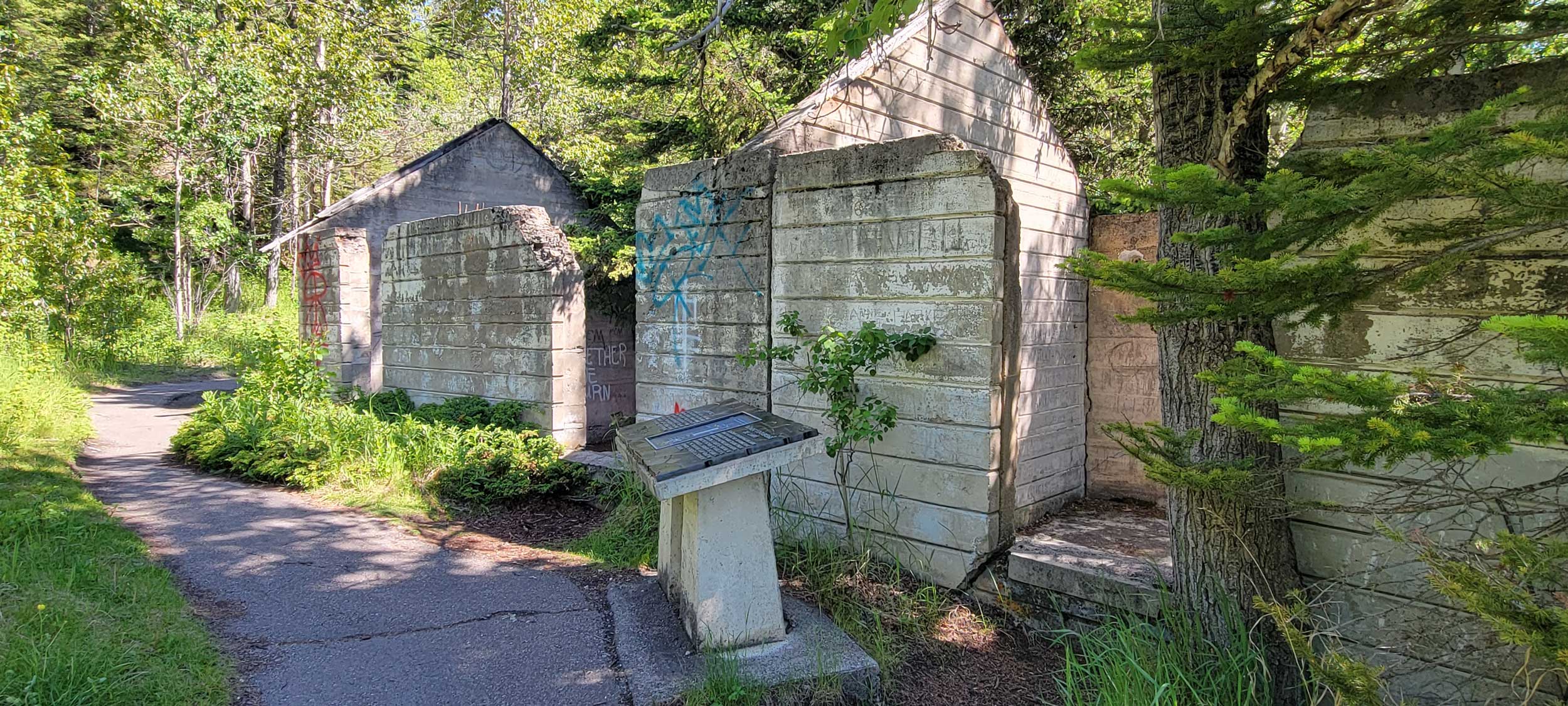
The Lamp House was once an important building in the operation of the mine.
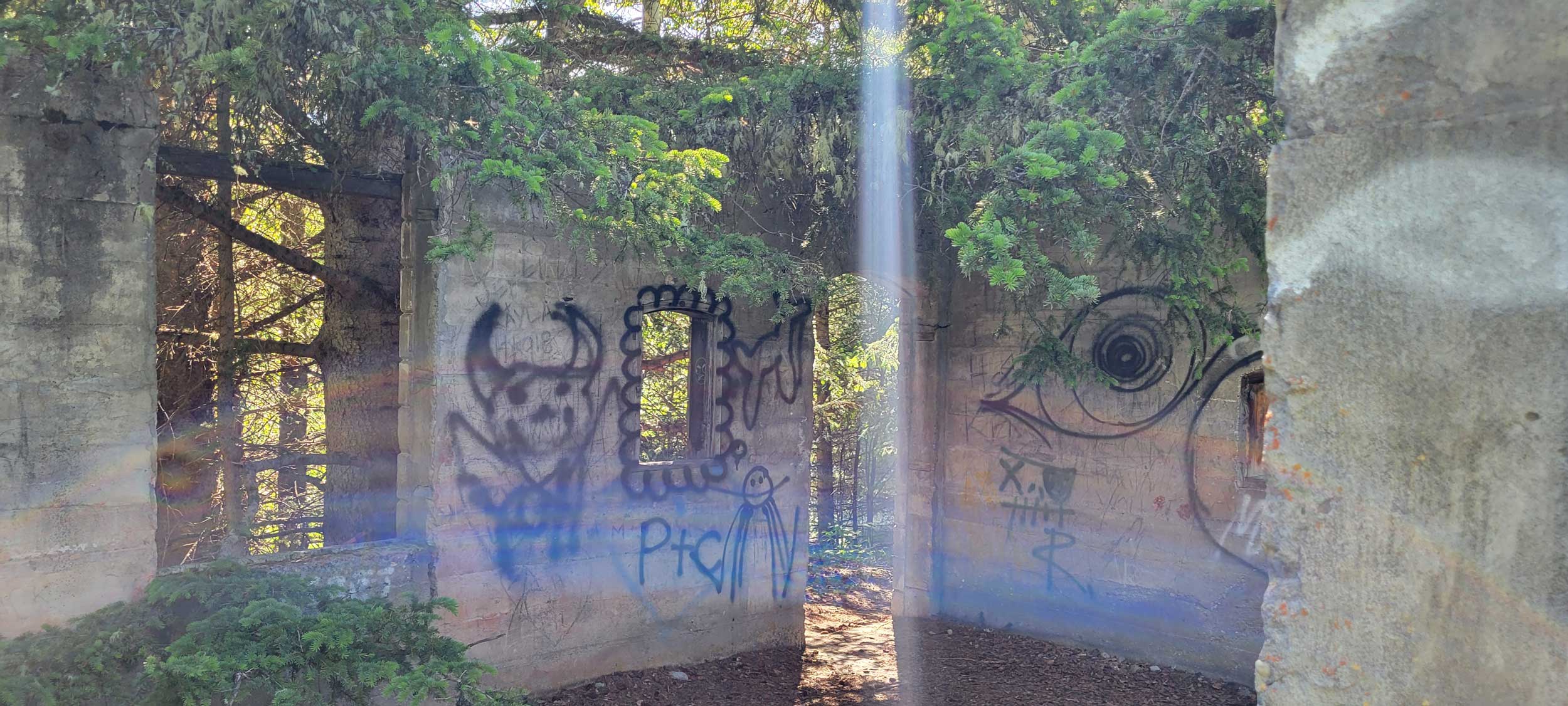
The inside of the Lamp House no longer reflects its importance in the mining operations. It's now quite whimsical with trees reclaiming the space and graffiti on the walls.
The trail wanders through the trees and crosses some bubbling brooks with sturdy wooden bridges. It’s easy to forget this was once the bustling operations of a coal mine, not just a leisurely mountain stroll through the trees.
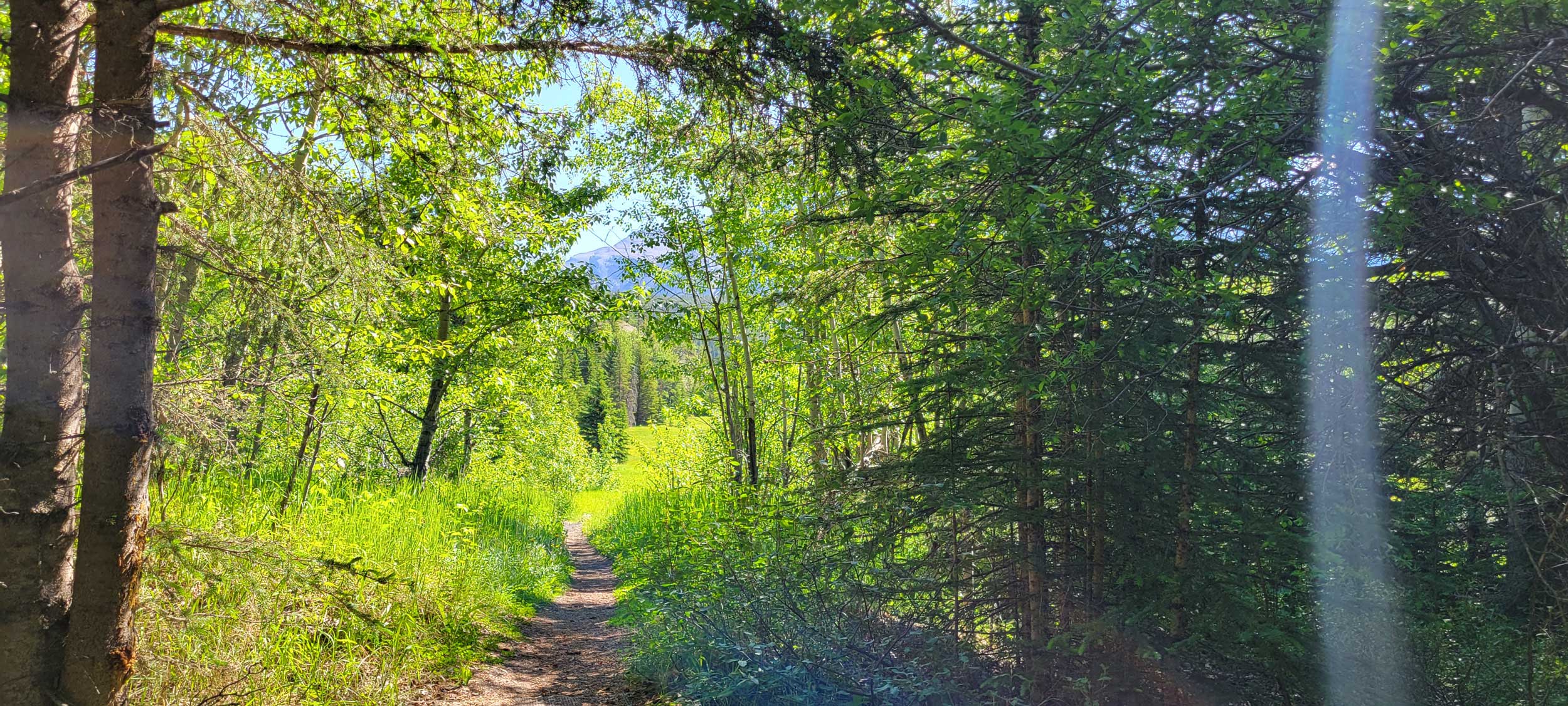
The treed portions of the walk make it easy to forget this was once a mining operation.
The transformer building is the only in-tact structure that remains in lower Bankhead. It has displays about the mining operations and stories from the miners themselves about living in this area at the time. Interesting artefacts surround this building, including a pump that once filled the Bankhead reservoir, a coal car that once moved product within the mine, and an electric motor that was part of Bankhead’s electricity system, which was the envy of small Alberta towns at the time.
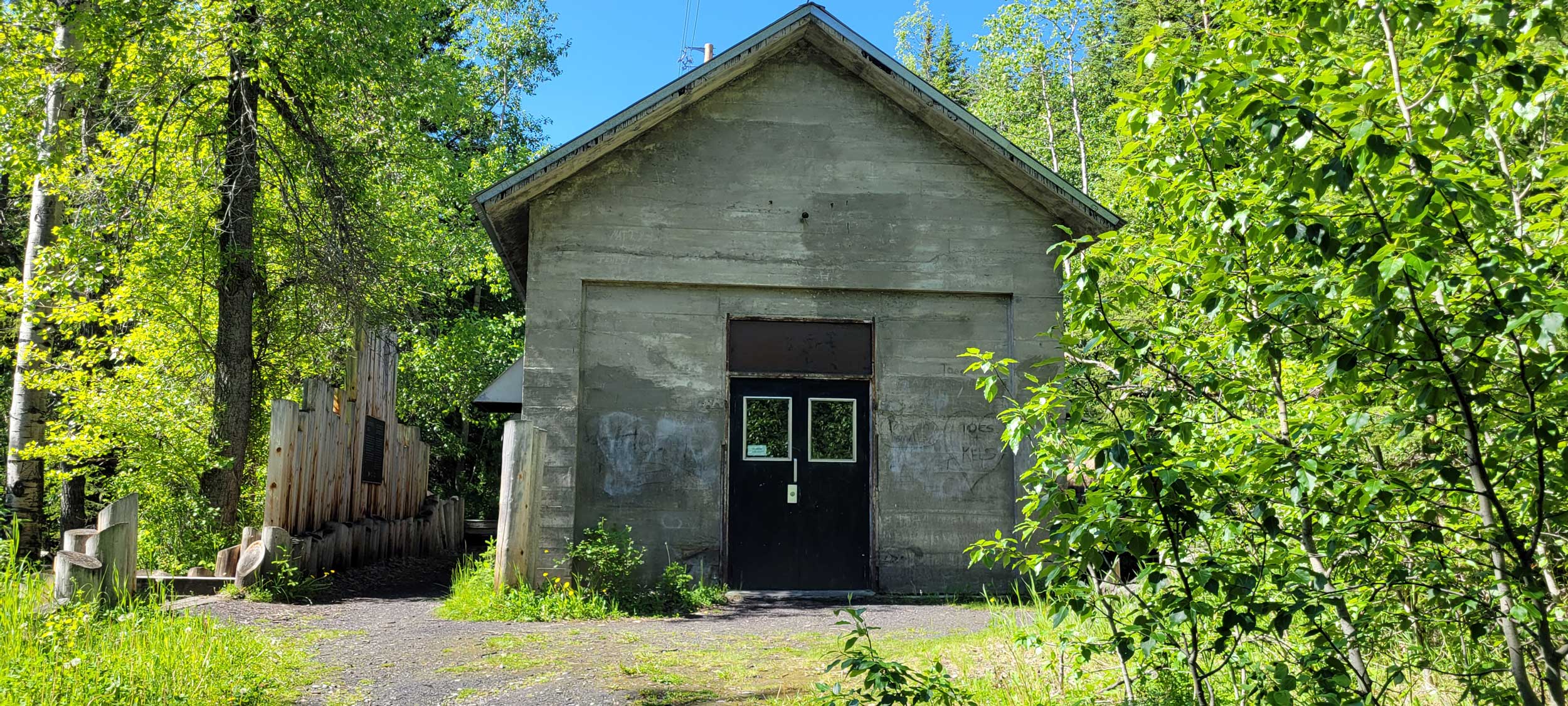
The transformer building is the only in-tact structure in Lower Bankhead.
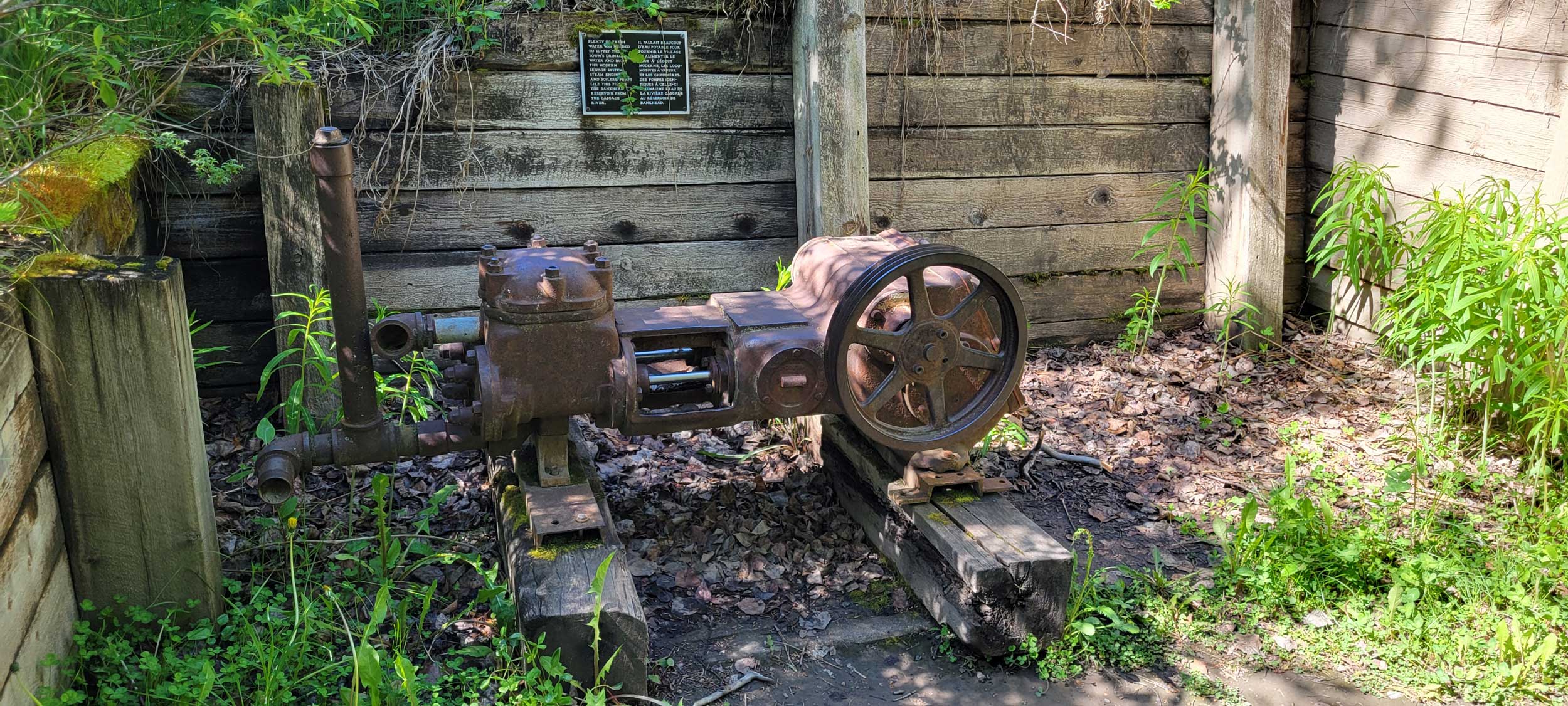
Pumps like this meant Bankhead had running water.
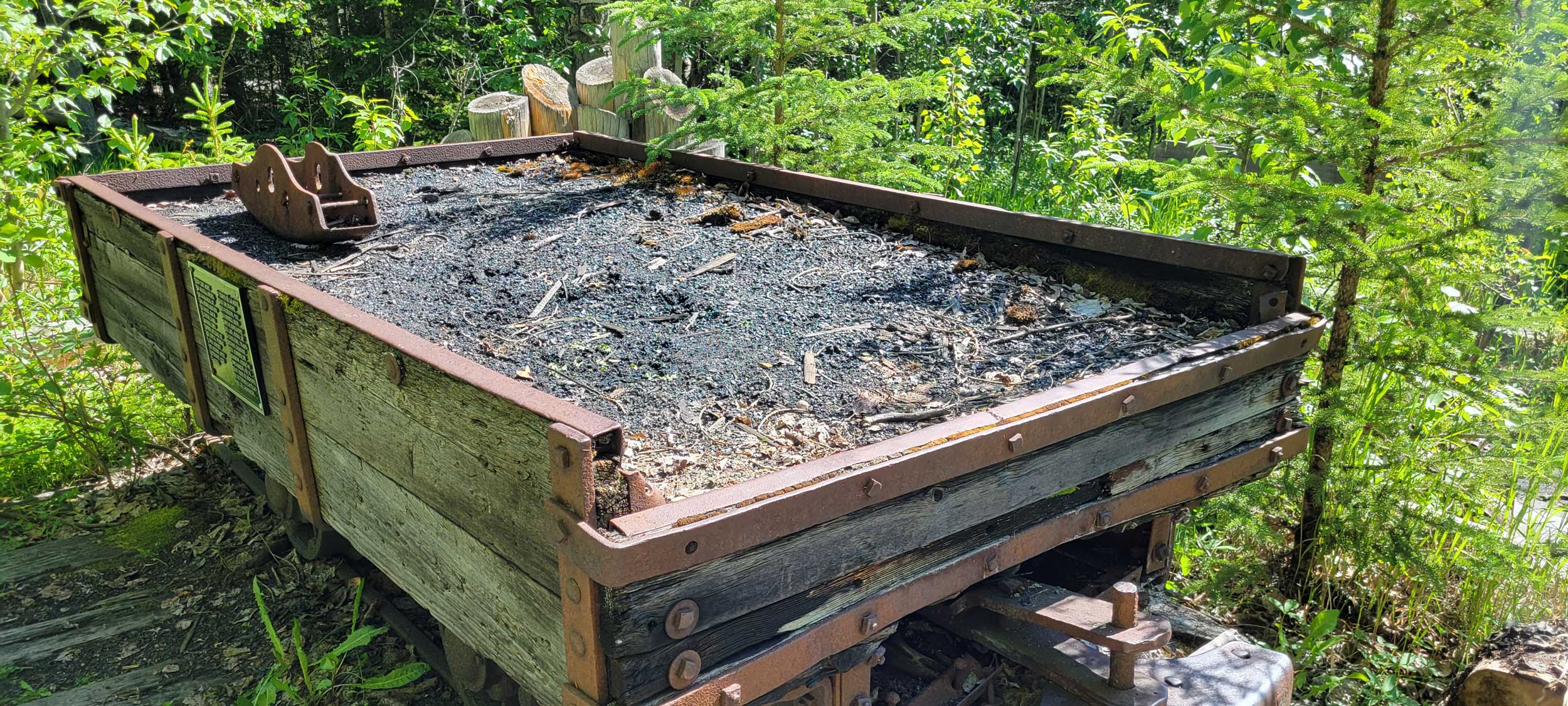
Coal cars were used to transport the coal from the mine to the processing plants.
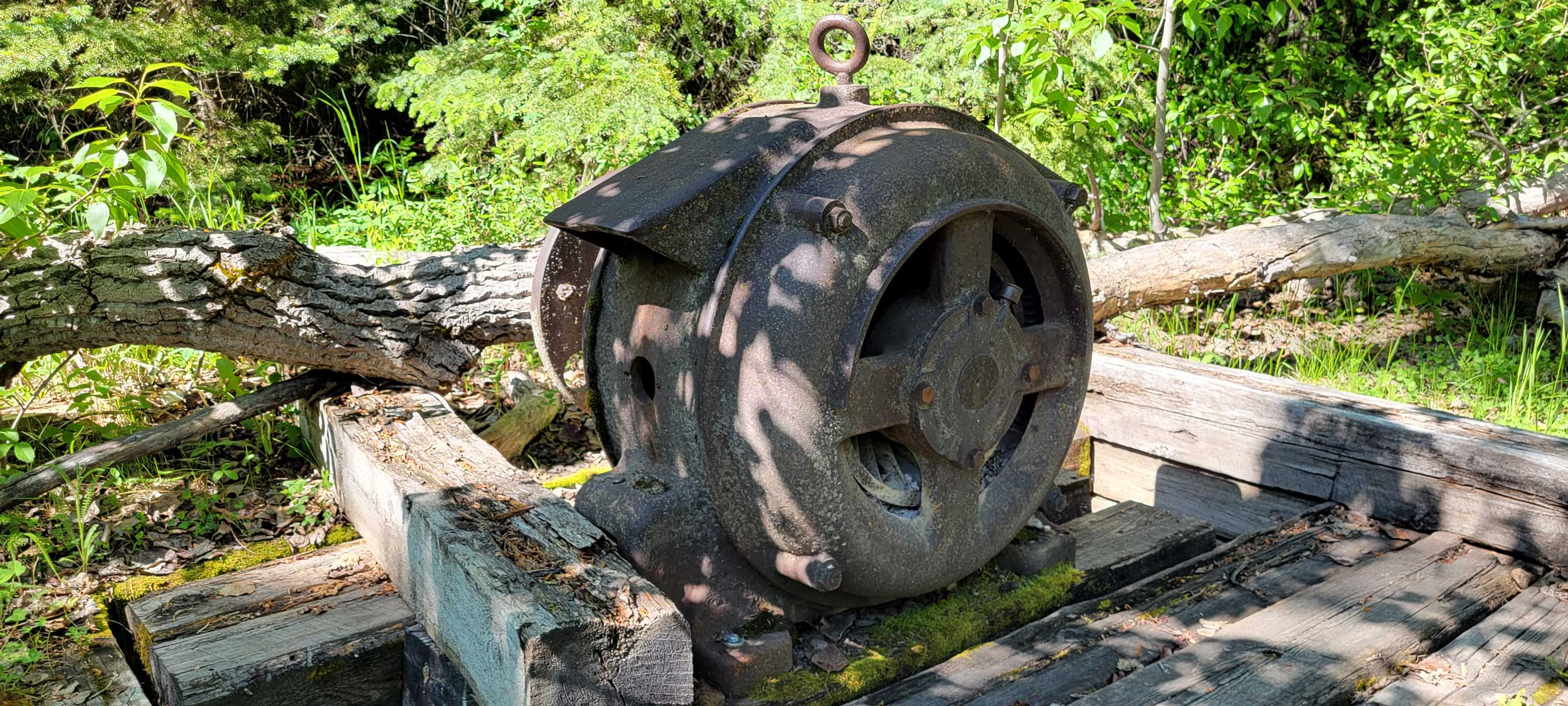
Electric engines meant Bankhead was a sophisticated town for its day.
Other artefacts include a large fan, which was used to circulate air in the mines, preventing the buildup coal dust and poisonous, explosive methane gas. There is also a tugger hoist, which was used to keep coal cars moving until they were hooked back up to the locomotives.
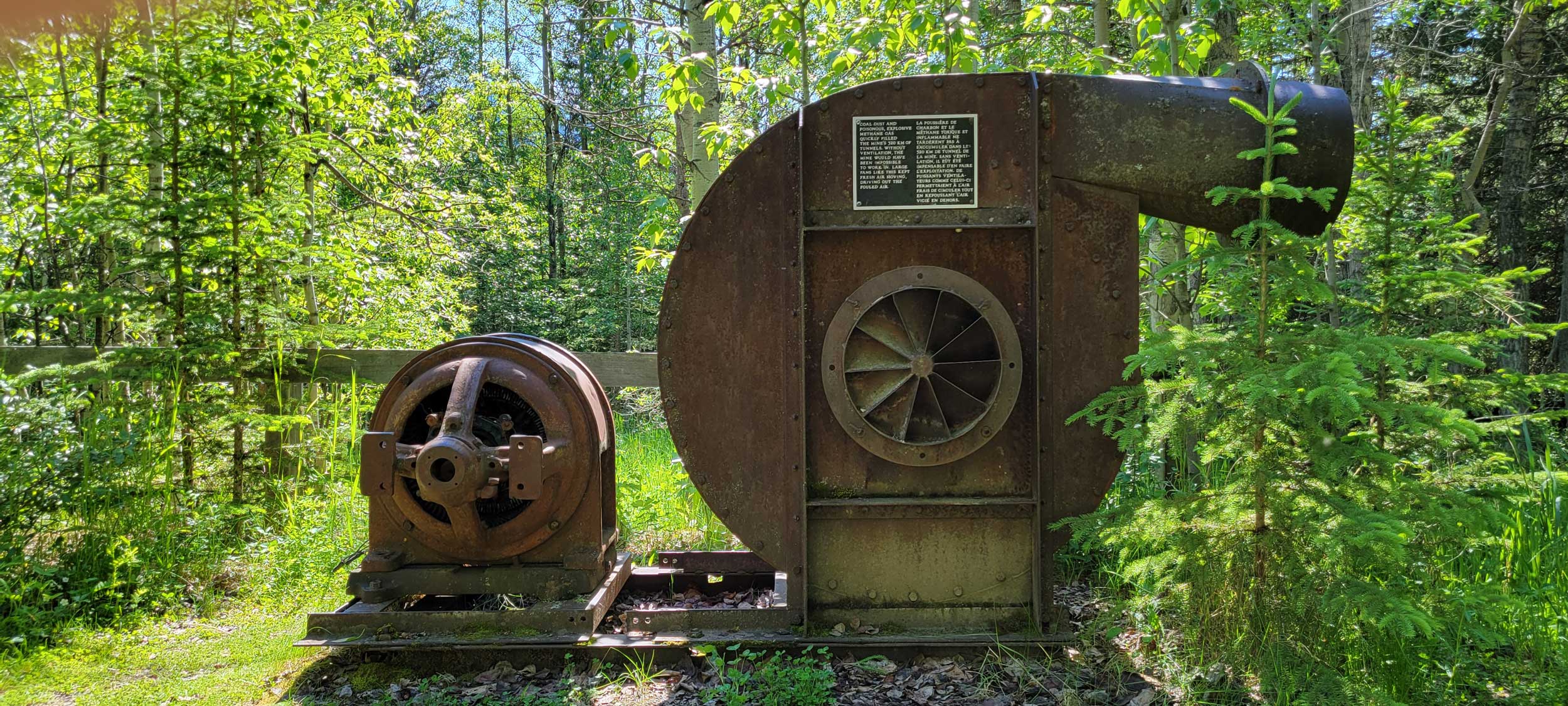
Fans like this kept the air breathable in the Bankhead Mine.
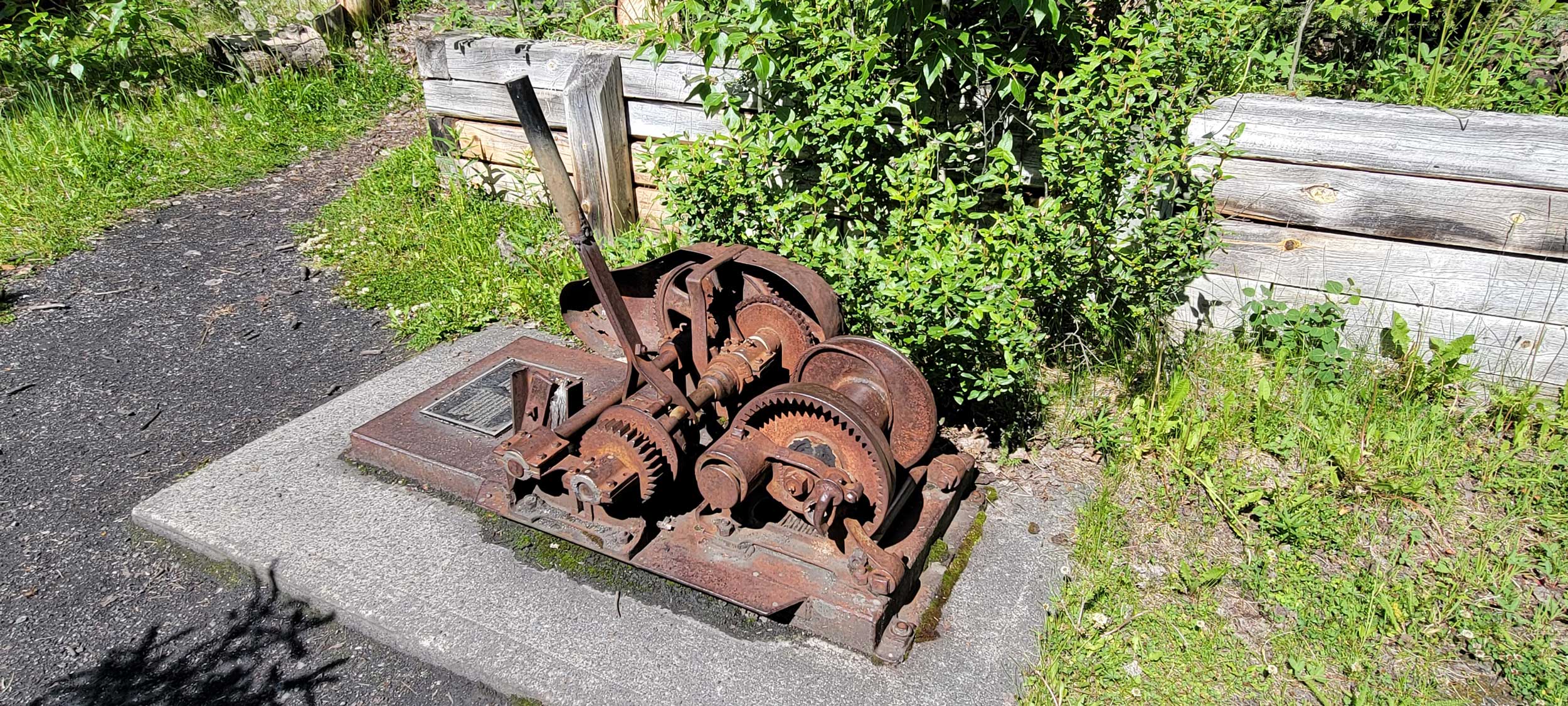
A tugger hoist was used to move the coal cars when they weren't attached to an engine.
Next on the tour are the remains of the Power House. The large concrete foundation walls were thick enough to withstand the vibrations of equipment used to generate electricity for the mine and the homes in Bankhead. What was once an impressive structure filled with even more impressive machinery is now little more than tall, concrete foundations that are slowly being swallowed by the force of nature. The trees grow between the walls and it would be easy to walk by the massive remains without recognizing them if it weren’t for the signage along the trail. I wonder how the miners would feel seeing their once important structure now slowly returning to Mother Nature’s grip.
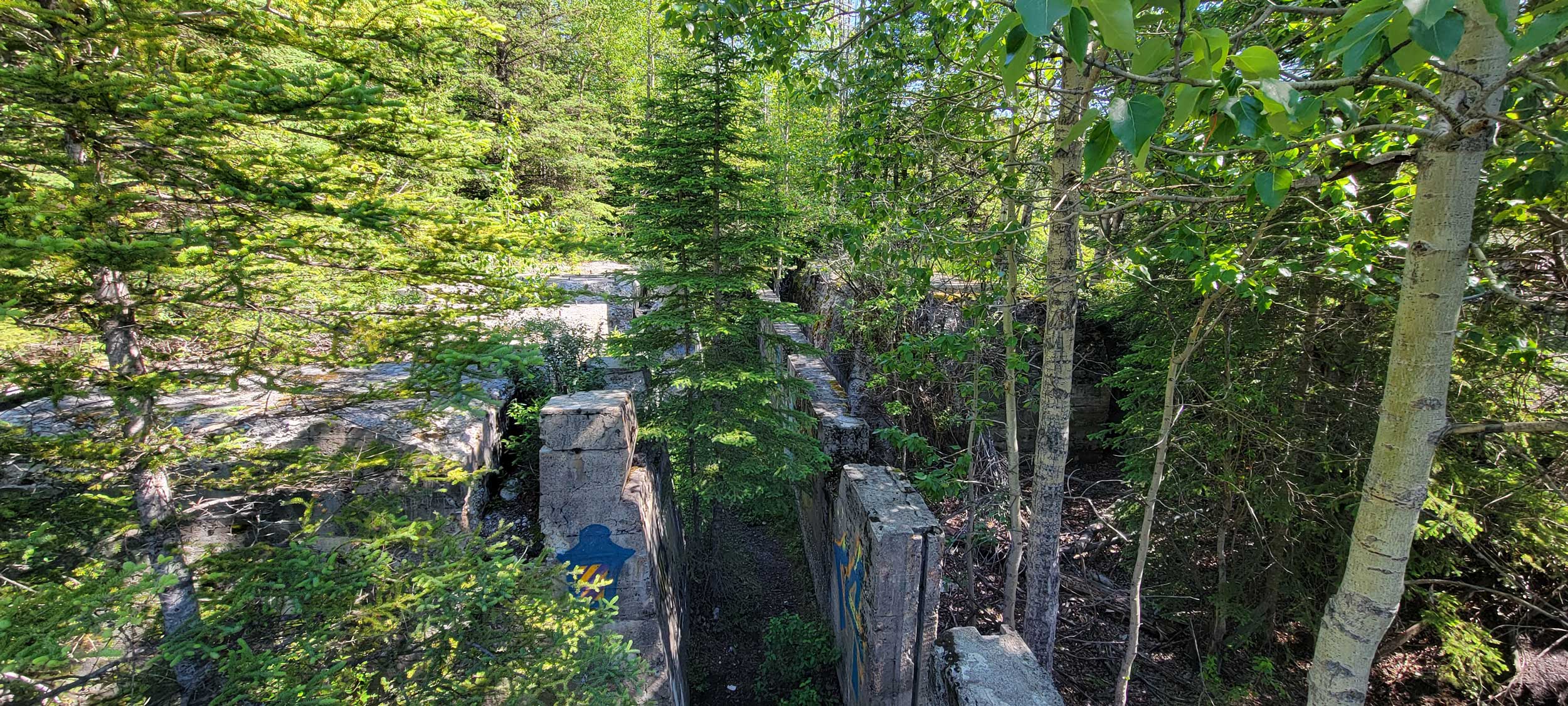
The tall, concrete foundations of the power house are slowly being reclaimed by the force of nature.
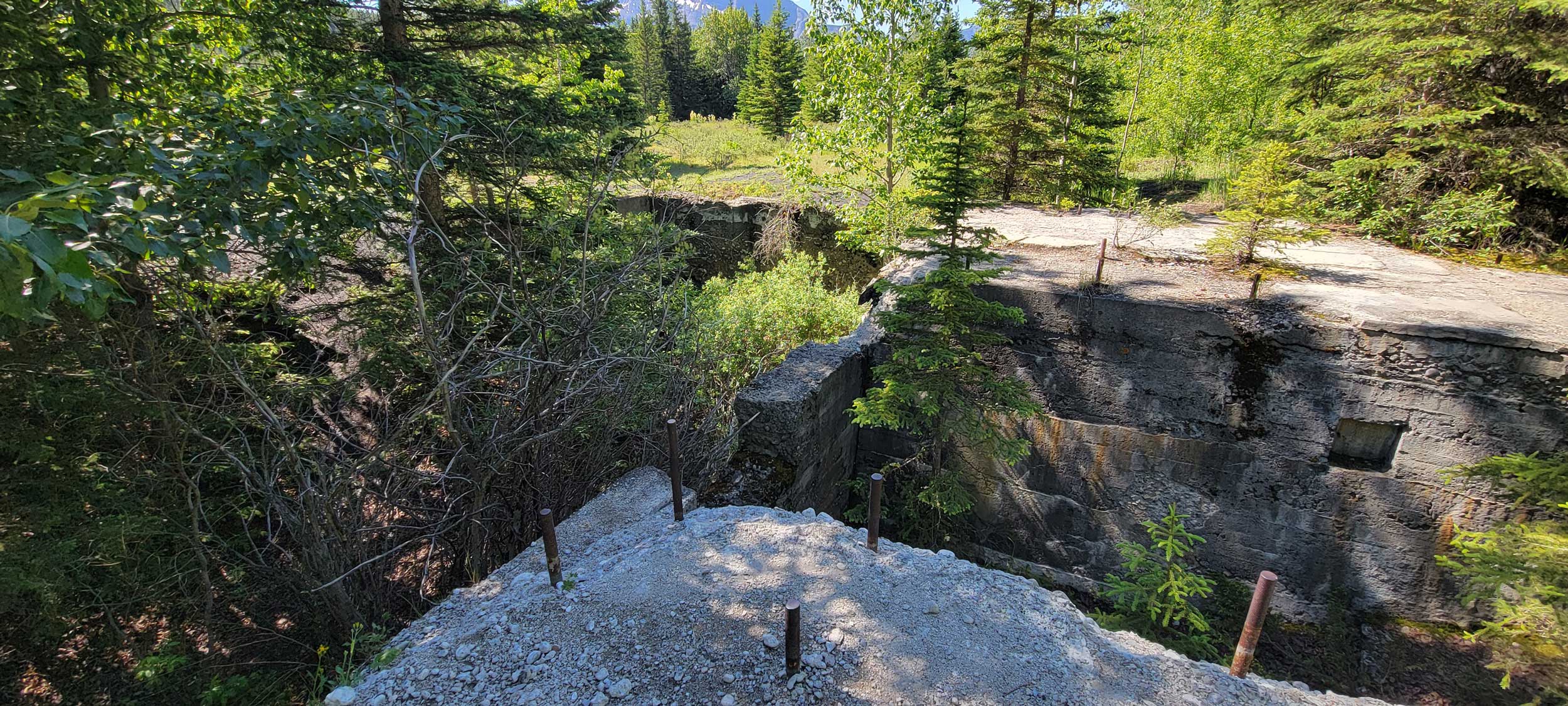
The walls of the power house were thick to combat the vibrations of all the machinery that was once inside.
After another short jaunt through the trees – with a stellar view of Mount Rundle – is a tall wall that juts out of the wilderness, no longer supporting a building but still standing strong amongst the forest. This is the remains of the Boiler House, where coal was burned to boil water, creating steam which powered the machinery of the mine. There are historical photos that show how large the building once was, but now all that remains are tall concrete walls amidst the encroaching trees.
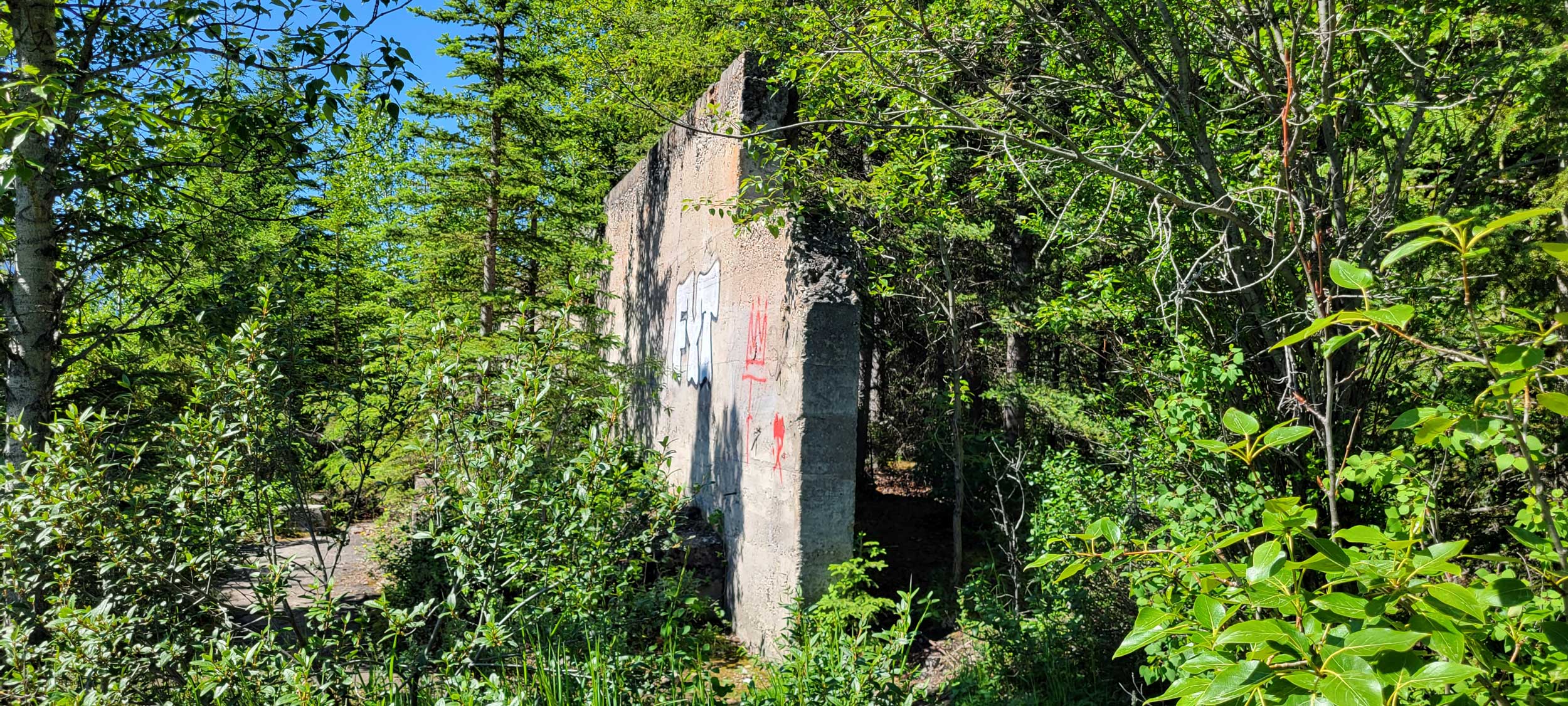
The tall wall of the boiler house emerges from the trees.
The Briquette Building is almost completely engulfed by nature, but the archways and remaining concrete structures remind me of castle ruins that would have delighted me as a child and offered hours of play. There’s almost a magical quality to the place now, even though it was once an industrial complex where the brittle coal from the mine was processed into briquettes by combining it with pitch under great heat and pressure. Again, the signage has photographs of the building in its prime, but the industrial nature of the area has long disappeared into the lushness of the trees.
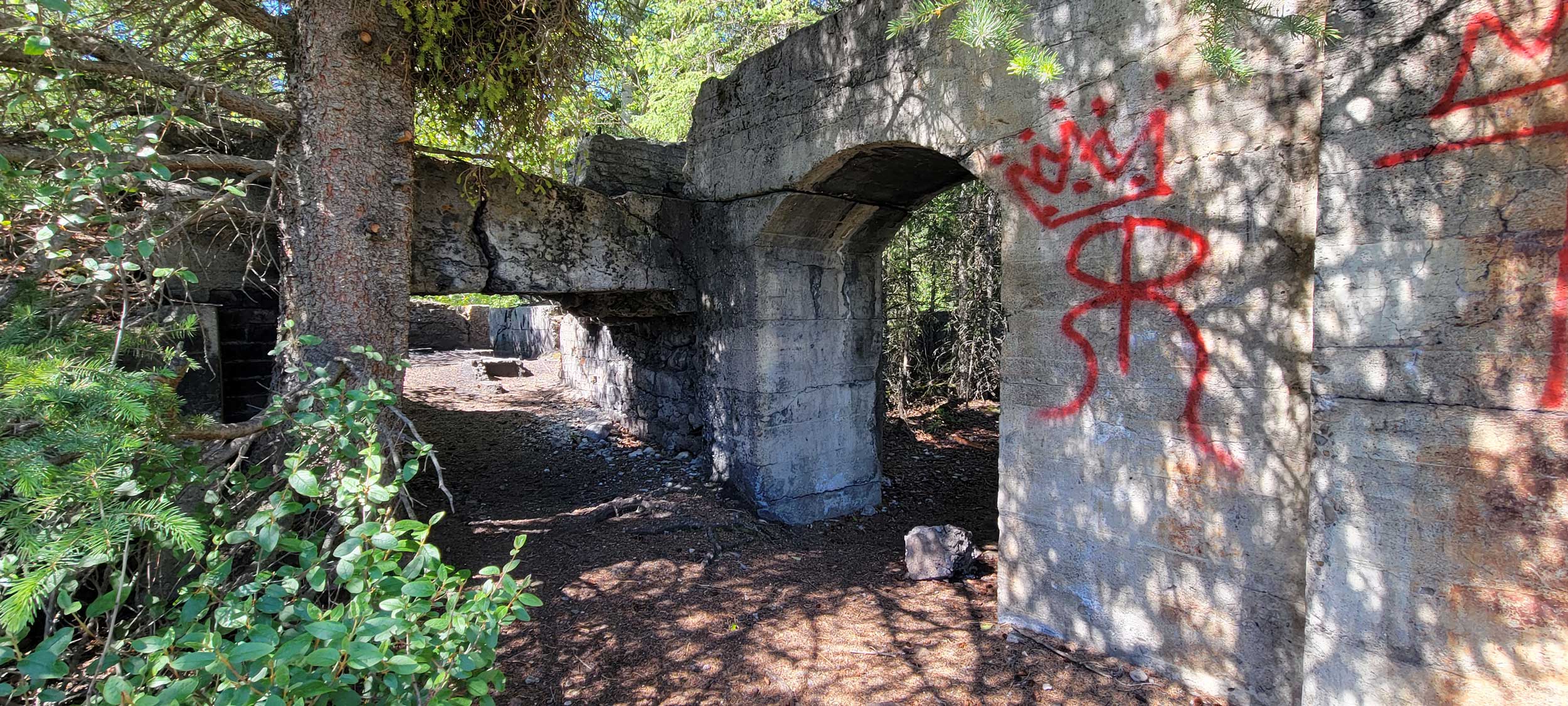
The remains of the briquette building have a magical quality as they are completely consumed by trees.
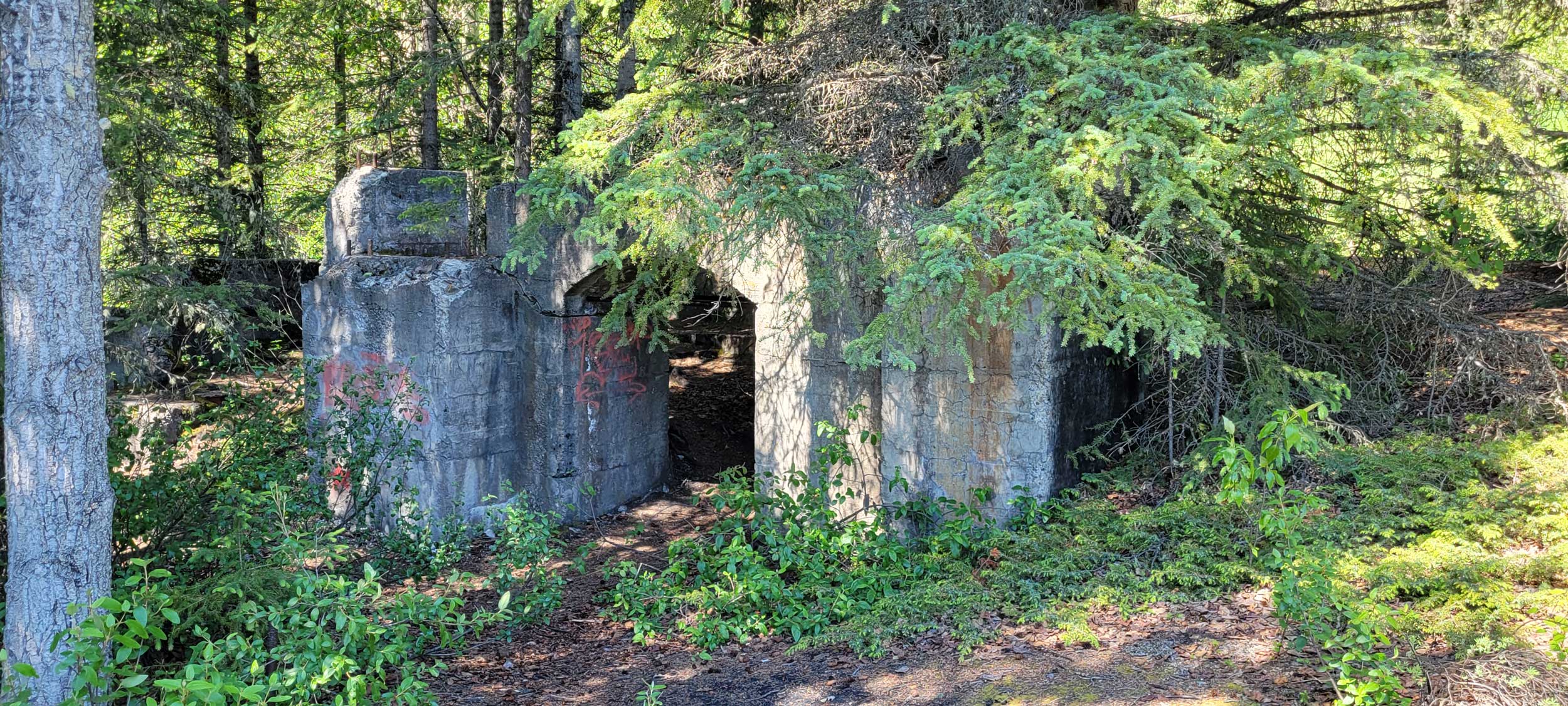
There's something about the archways to this building that make me think I would have loved playing here a a child.
Very little remains of the Tipple, where the coal was separated from the rock through a series of screens and chutes. The slack heaps still remain around the Tipple, and the years of discarded coal and rock stand out as black mounds against the lush green trees in the heat of the summer. Around these slack heaps used to be the homes of Chinese immigrant workers, who did not live in the main town with the European immigrants. Nothing remains of the shanty towns except patches of rhubarb, which once grew in their gardens but now run wild through the grassy meadow.
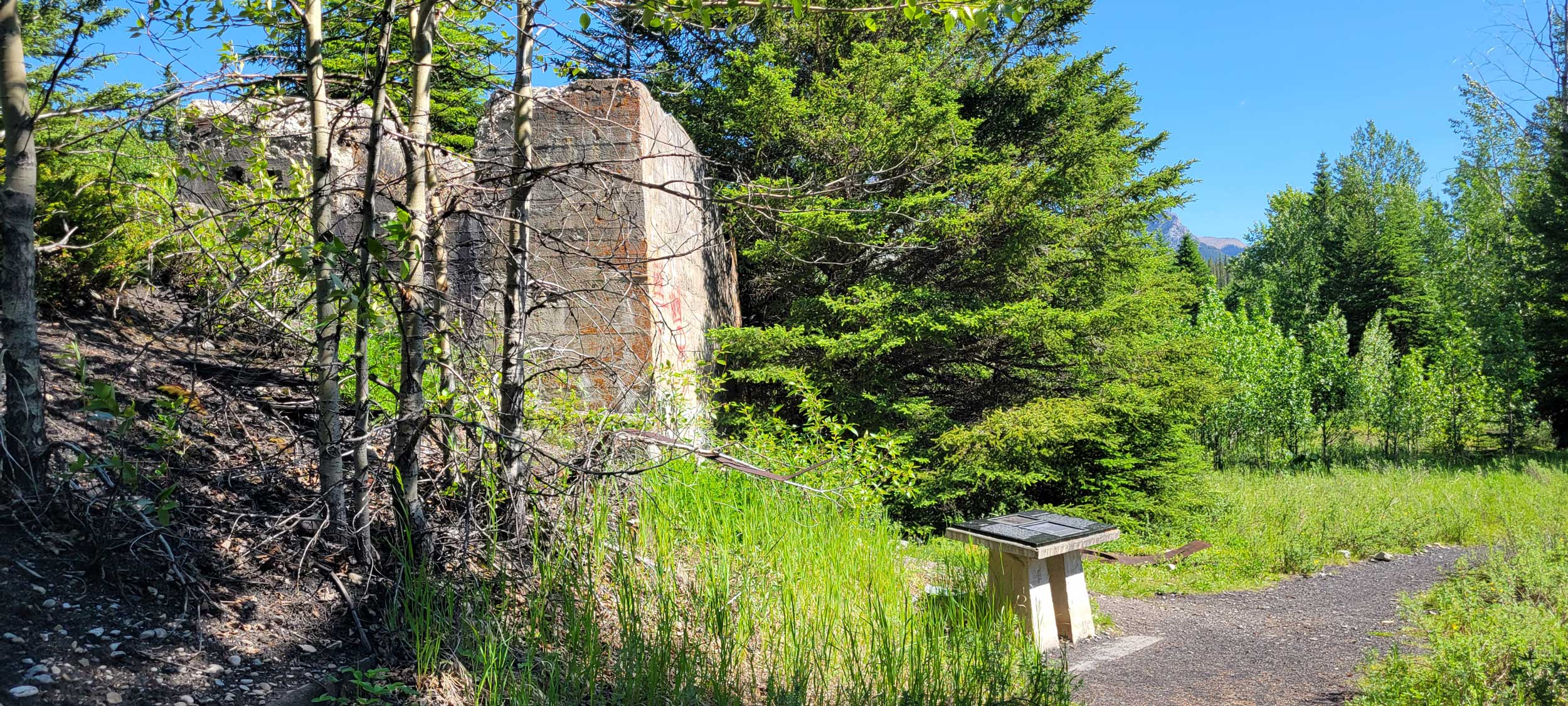
Not much remains of the Tipple, which was once a tall building.
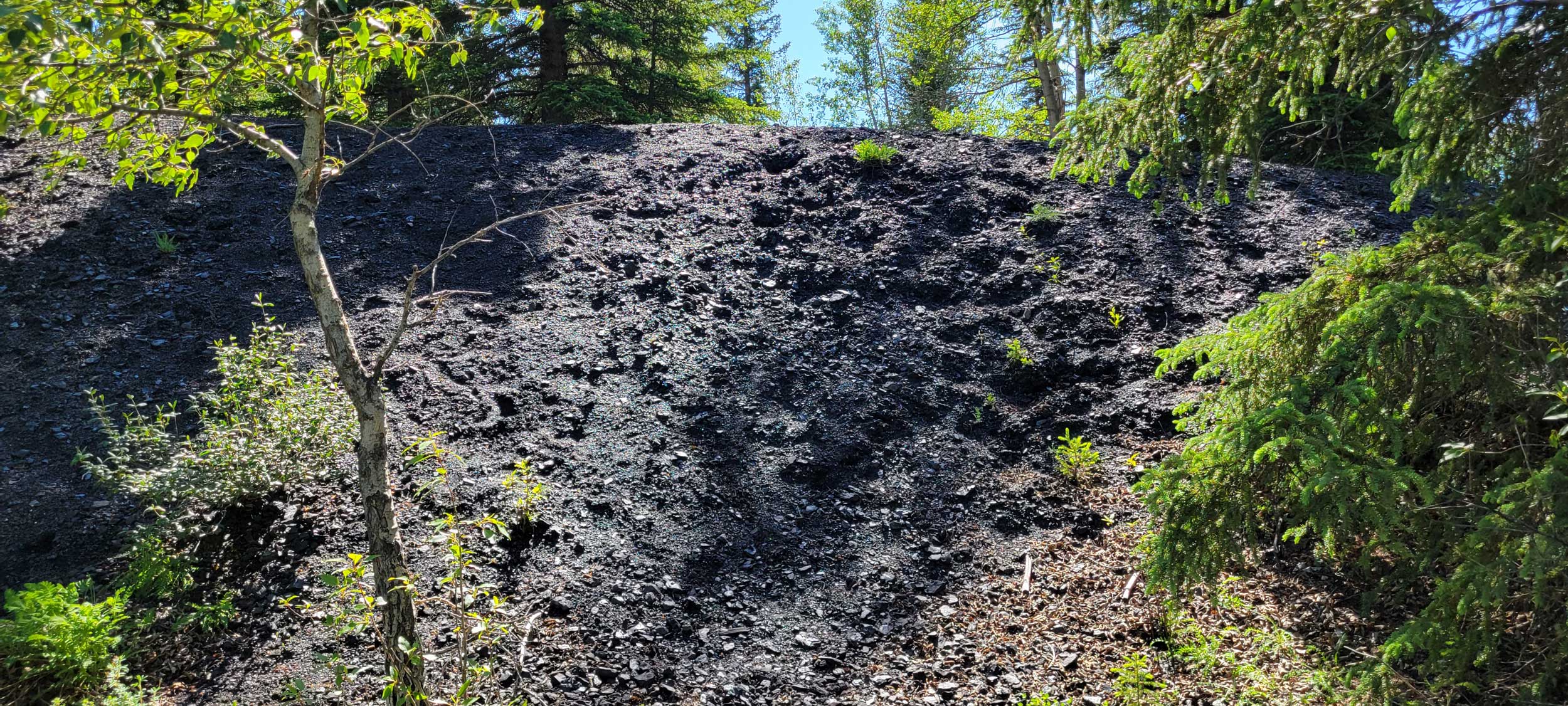
The black slack piles stand out against the lush green summer foliage.
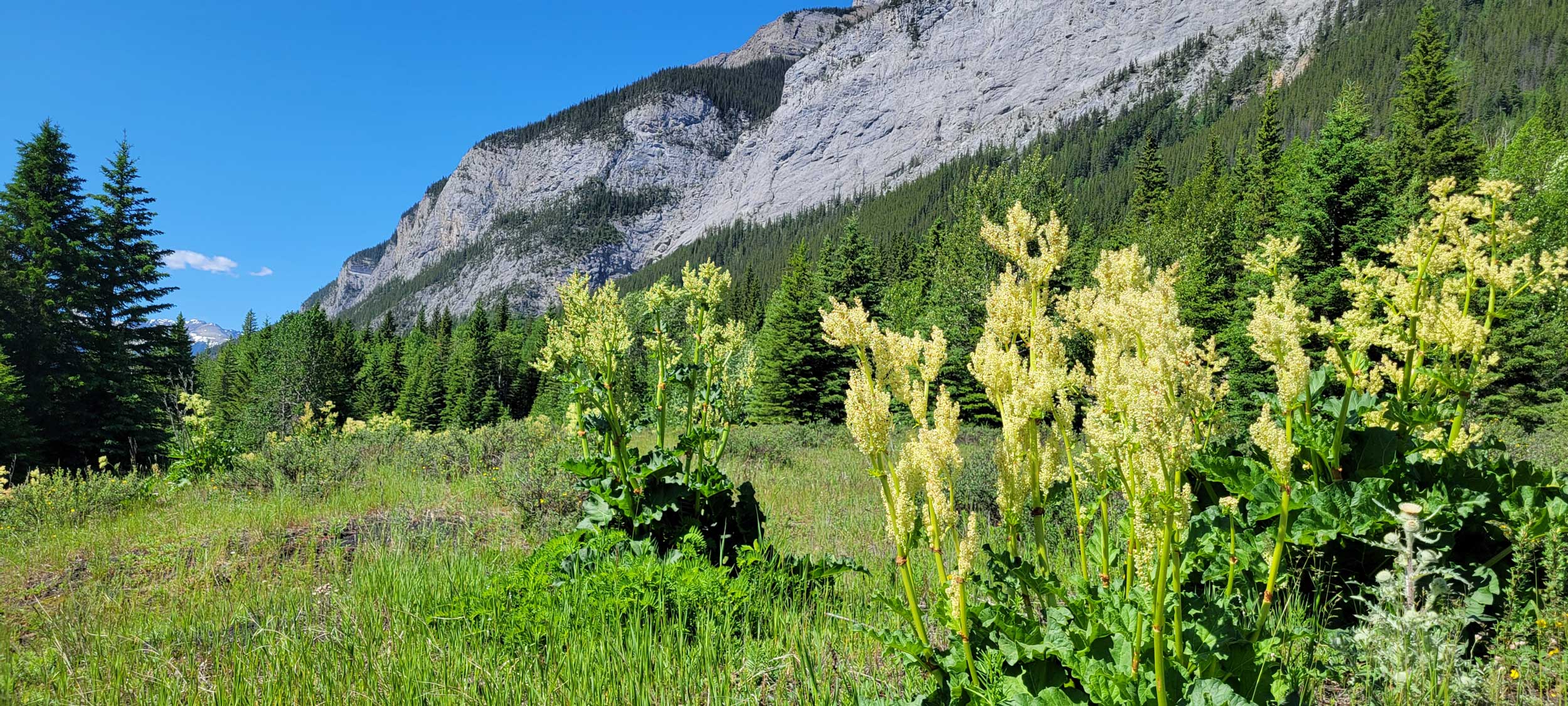
Rhubarb once grew in the gardens of the Chinese shanty town homes. Now, it grows wild in the meadows, the only reminder that people once lived here.
The coal train is one of the more popular artefacts of lower Bankhead, and it still sits proudly on the tracks beside the ghost town. This particular train was used in Canmore, but it is the same type that would have worked in Bankhead before the mine closed.
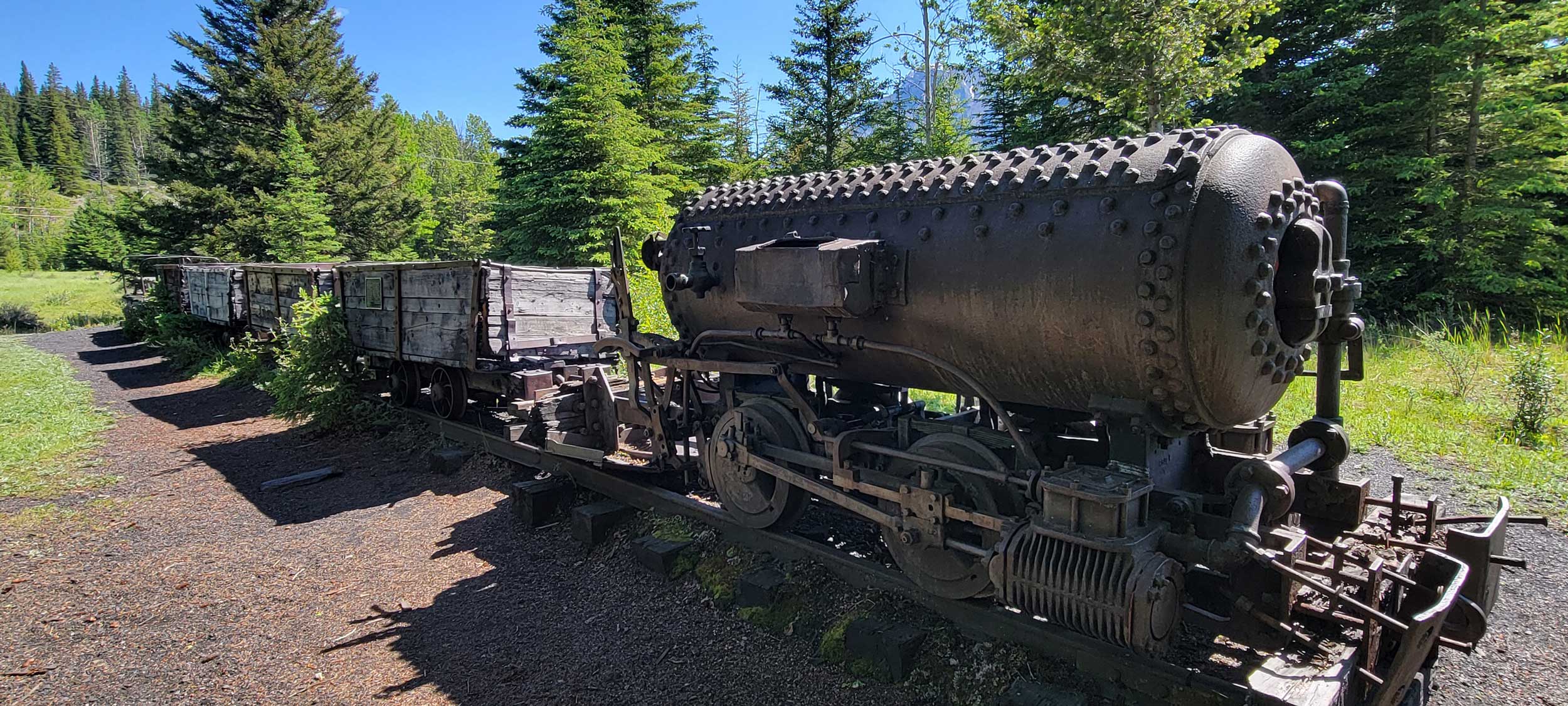
The coal train is an iconic symbol of the mining at Bankhead.
A few more foundations remain in Lower Bankhead, but they are little more than concrete bricks slowly being swallowed by Mother Nature as grasses and trees reclaim the land. The path ends with some more stunning mountain views, reminding the viewer of the power of the landscapes that draw us all to this wonderful place.
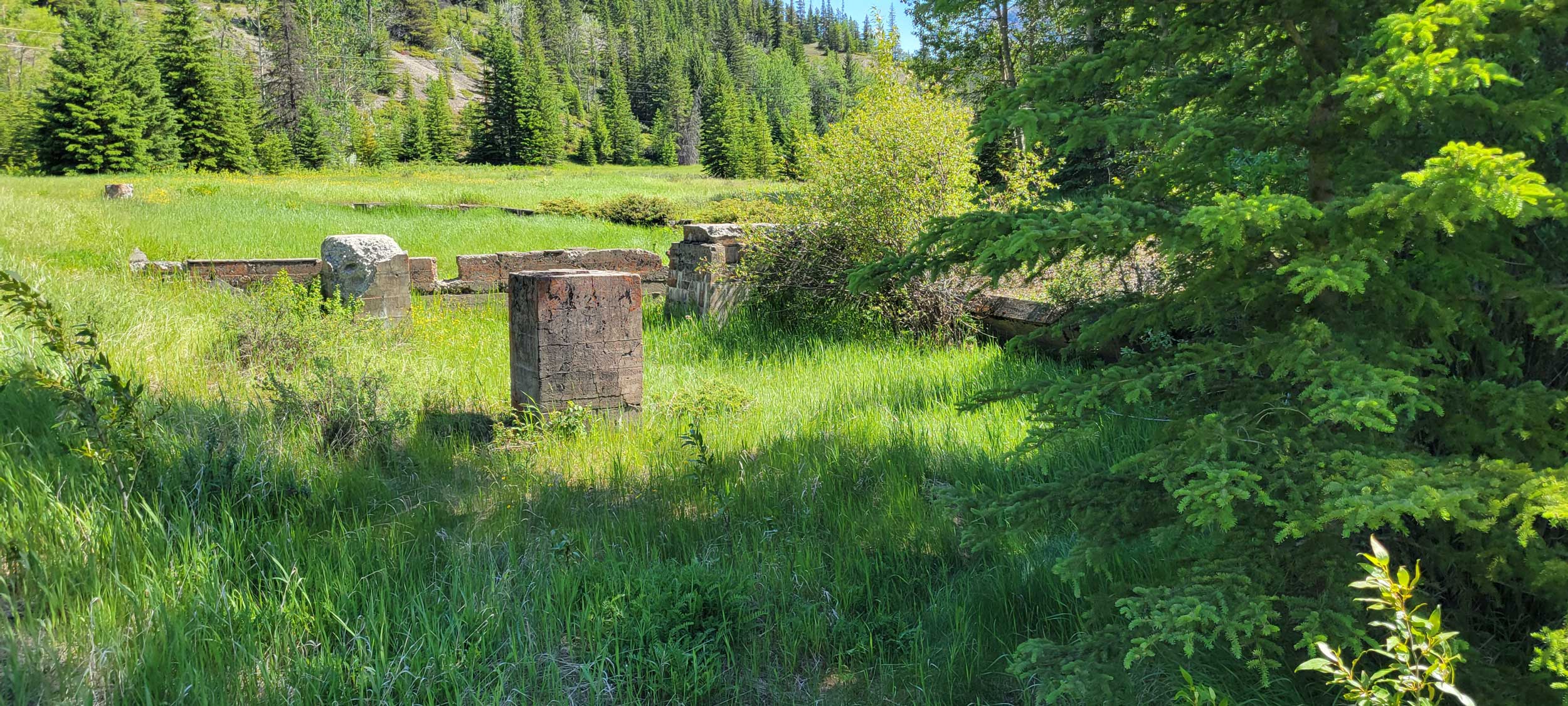
Foundations of buildings in Lower Bankhead are overgrown by the lush summer grass.
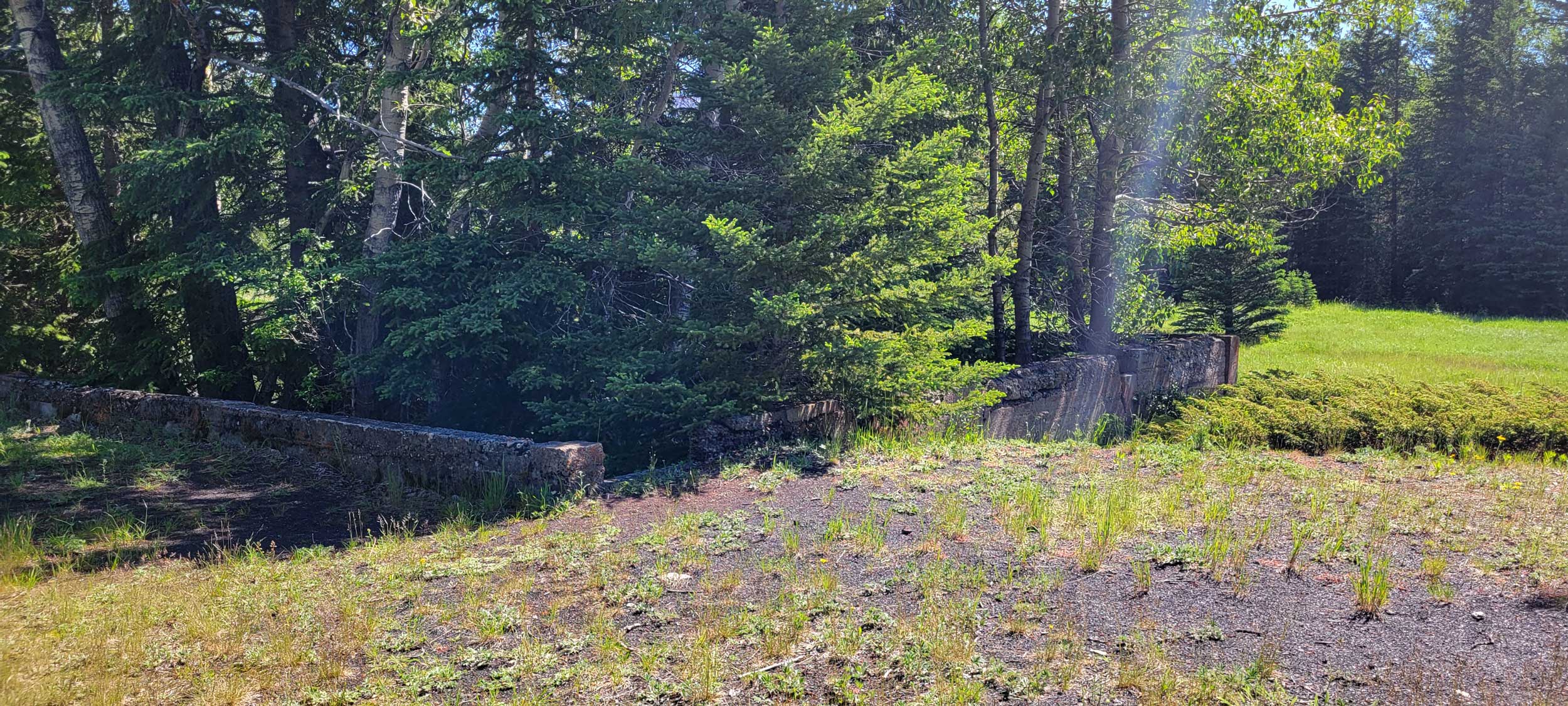
The buildings of Lower Bankhead are slowly being reclaimed by Mother Nature.
For a short, relatively easy interpretative hike, the Lower Bankhead trail is a great spot for visitors to stop and learn about the coal mining operations that once took place in Banff National Park. The ruins throughout the forest are a unique piece of Banff history that’s not commonly talked about, and the tour reflects the industriousness of the people at the time alongside the changing attitudes about nature and conservation. It’s definitely worth taking a half hour to explore the hidden history of Bankhead, Banff’s own little ghost town.