




Waterton-Glacier: A Living Symbol of Cross-Border Collaboration
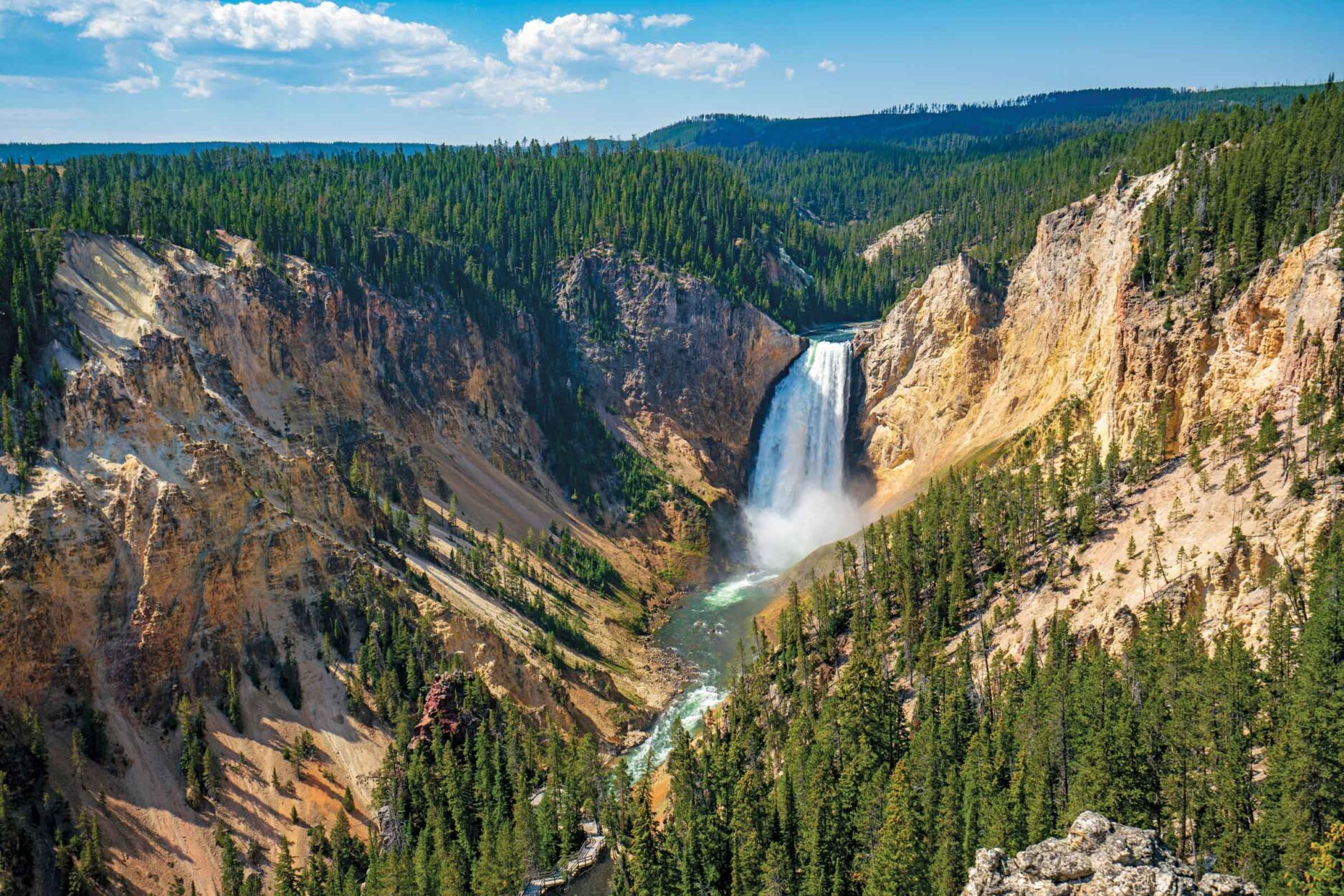


The feeling of looking over the expanse of a glacial lake or plunging into its turquoise waters is breathtaking and an invigorating experience no matter where you stand or swim. Each year thousands of visitors from around the world make their way to the Crown of the Continent – a vast, mountainous, regional ecosystem in the Rocky Mountains, with its backbone spanning across northwestern Montana in the United States into Alberta, Canada.
First Nations have stewarded this land since time immemorial, attuned to its rhythms, the species who call it home, and the intricate web of life that sustains communities across the landscape. Known as Paahtómahksikimi (Inner Sacred Lake) in Blackfoot, the area has been used for over 10,000 years for hunting, plant gathering, and spiritual ceremonies. This is the ancestral and current territory of the Kainai, Piikani, and Siksika nations of Blackfoot Confederacy, as well as Tsuut’ina, Stoney Nakoda, Ktunaxa, and the Métis Nation of Alberta.
Millennia after Indigenous peoples first shaped their relationship with these mountains and waters, a new vision emerged: in 1932, Waterton-Glacier became the world’s first international peace park. The idea was first proposed by Rotary Club members from both countries, who together saw an opportunity to promote peace and friendship by celebrating the shared natural heritage of the region.
Successful Cross-Border Collaboration
Thanks to grassroots advocacy and cross-border goodwill, the two parks were officially linked by an agreement between the U.S. and Canada. It was a pioneering moment and proof that international cooperation could be rooted in shared values and common ground. The Peace Park’s global importance was recognized when it was designated as a World Heritage Site in 1995.
The Peace Park is part of one of the most wild, intact, and biodiverse mountain systems in the world. Bears, lynx, wolverines, bison, elk, and many other species don’t stop at the border, and neither do fire, floods, or changing climate. That’s why cooperation isn’t just helpful; it’s essential. According to Parks Canada staff, park managers, scientists, Indigenous and non-Indigenous communities, and nonprofit organizations from both countries regularly share research, align strategies, and support one another through collaboration.
That spirit of cross-border cooperation lies at the heart of the Yellowstone to Yukon Conservation Initiative (Y2Y). Just as Waterton-Glacier connects two national parks, Y2Y connects more than 3,400 kilometres (2,100 miles) of habitat, from Yellowstone National Park in the south to Yukon Territory in the north. And just as in the Peace Park, success along this corridor depends on crossing boundaries – jurisdictional, political, and cultural – to protect wildlife and wild places so that people and nature can thrive.
Room to Roam
This park, and the people who care for it, show us that collaboration can supersede political borders, and that shared values such as clean water, healthy wildlife, and thriving communities can unite us. We have a responsibility to wildlife, to future generations, and to each other to protect the lands that are part of our legacy. Y2Y believes in a future where people and nature thrive together, and parks and protected areas are a part of that vision.
Connecting and protecting wildlife habitat is at the heart of Y2Y’s mission — providing animals with room to roam through migration corridors, ways to find food, and paths to survival. But it was the story of one wolf who revealed just how much space wild animals actually need. In the 1990s, a female grey wolf named Pluie showed that some animals ranged farther than anyone thought. She traveled over an area of 100,000 square kilometres (almost 39,000 square miles) across the Yellowstone to Yukon region, including traversing through Waterton Glacier parks. Pluie’s journey is just one of many that shows us how far wild animals travel.
Waterton-Glacier is a hopeful model for collaboration in conservation. It offers proof that when we act together, we can achieve more than we ever could alone. It shows that conservation isn’t a national effort – it’s a collective international one. And it inspires us to keep building bridges across boundaries, for the sake of the species and spaces that depend on them.
What Can You Do?
Whether you’re visiting for the first time or returning to a favourite trail, your actions as a park visitor matter. Here’s how you can be a great steward and make a difference for the landscape
- Spend time in a national park: Explore the unique beauty, cultures, and ecosystems. When you spend time in a national park, you’re supporting protected lands while connecting to the natural world.
- Practice coexistence with wildlife: Give animals space, always store food securely, and never – never – feed wildlife. Stay alert on trails, keep pets on a leash, carry bear spray, and follow park guidelines to keep both wildlife and people safe.
- Respect the land and tread lightly: Stick to marked trails, avoid disturbing sensitive habitats, and pack out everything you bring in. Your care helps protect fragile ecosystems and rare species. Treat the local, bordering rural communities near the parks with respect.
- Learn about Indigenous cultures and knowledge: Indigenous First Nations have stewarded this land since time immemorial. Seek out opportunities to learn their stories and values and support their leadership in conservation.
- Support cross-border conservation: Donate to or volunteer with organizations that work across jurisdictions to protect wildlife corridors, advocate for more protected areas, and champion collaborative solutions.
Together, we can ensure that places like Waterton-Glacier continue to inspire and last for generations to come.
About Yellowstone to Yukon Conservation Initiative
Formed in 1993, Yellowstone to Yukon Conservation Initiative (Y2Y) is a collaboration between a Canadian public charity and a U.S. non-profit organization that connect and protect habitat from Yellowstone to Yukon so people and nature can thrive. As one of the world’s most inspiring large scale conservation efforts protecting the largest, wild mountain region on Earth, Y2Y is a model for how we can reverse the loss of biodiversity and use nature to help slow climate change. More than 25% of protected lands in the Y2Y region are managed or co-managed by Indigenous Peoples, and the region boasts more than 200 wildlife crossing projects helping animals safely crossroads to find food, mates and shelter all while keeping people safe.
The Yellowstone to Yukon region stretches across five American states (Washington, Oregon, Idaho, Montana, and Wyoming), two Canadian provinces (British Columbia and Alberta), two Canadian territories (Yukon and Northwest Territories), and at least 75 Indigenous territories. Learn more at www.y2y.net.