




A Walk along the Marsh Boardwalk in Banff
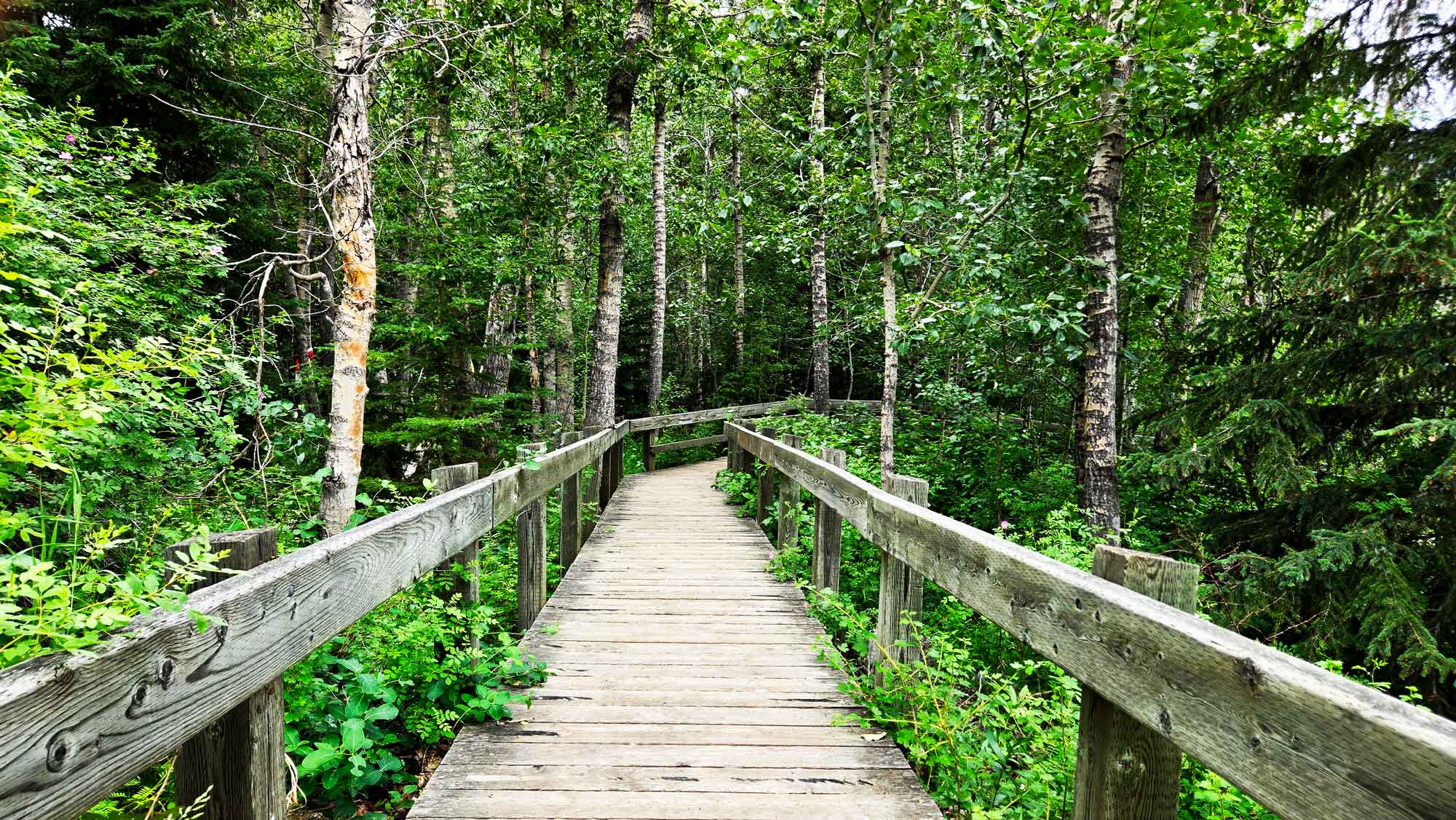


Banff is known for its rugged beauty. Thoughts of invigorating adventure in the Rocky Mountains don't exactly scream warm waters and tropical fish, but it was exactly a bit of hot water that spurred the beginning of Banff National Park, and the Canadian National Parks system as a whole. Today, a gentle walk along the Marsh Boardwalk reveals what this ecosystem has to offer.
The natural hot springs in Banff are a popular spot for many First Nations people and have been for tens of thousands of years. When three railway workers stumbled upon them, they thought they’d discovered something special. So did the Canadian government, which was running out of money trying to complete the railway to the west coast and secure more land for the country. Time to bring in the tourists.
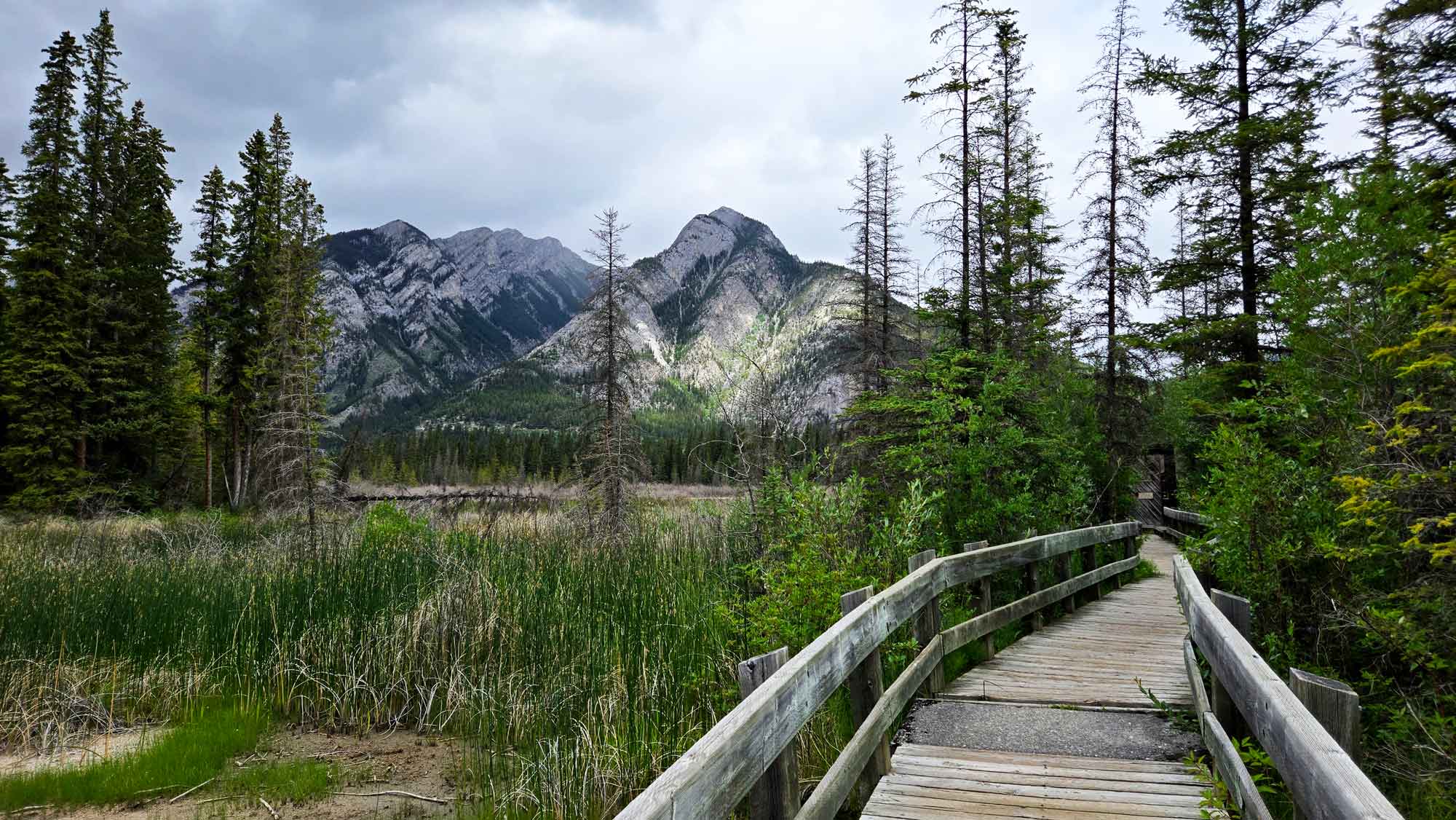
The boardwalk provides a mixture of rugged mountain views with lush green plantlife.
The bathing pavilion became a hot spot for tourism and Banff National Park was born. The unique ecosystem surrounding the hot springs also continued to capture the imaginations of visitors. The runoff of warm water creates its own microclimate, which operates with different rules than the rest of the mountain landscape. Today, the Marsh Boardwalk allows visitors to explore this environment without stomping all over the delicate ecosystem. Get ready for a combination of great mountain views and vibrant green forests.
The plantlife in this area is different than anywhere else in Banff. You can find orchids, watercress, Lindley’s asters, and more. The hot mineral waters provide nutrients to these plants, but their warmth extends beyond the banks, allowing the area to be a lush green haven in an otherwise rocky landscape.
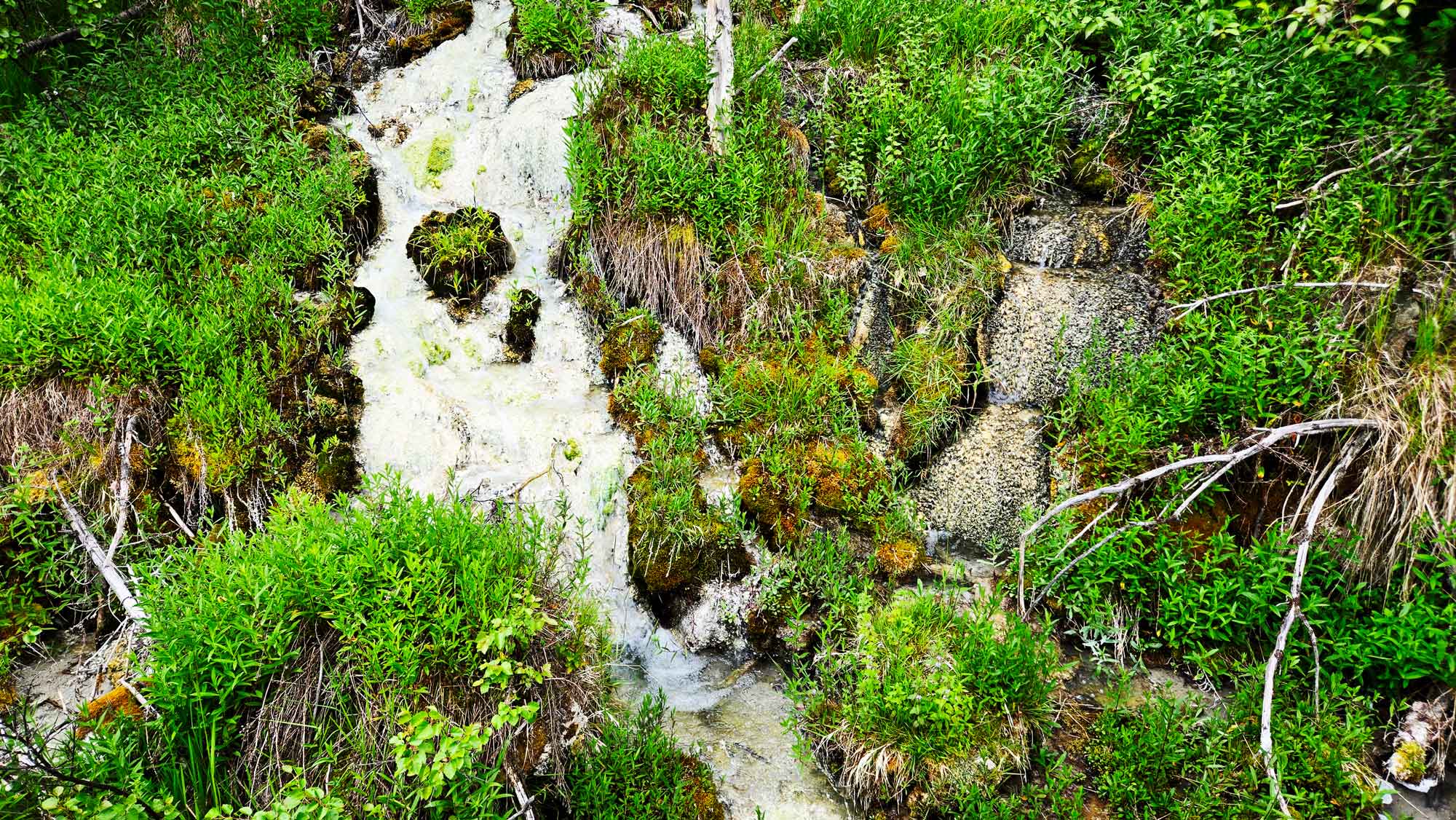
The area is a lush green haven.
Animals benefit from this warm water as well. Some birds stay through the winter while others of their kind fly south. Robins, snipes, mallards, and killdeer don’t usually stick around for cold Canadian winters, but they've all been spotted here in the coldest months of the year. The warm waters prevent the deep frost that coats much of the landscape in Canada. This allows insects, plants, and fish to stay active even when the temperatures drop. With enough available food to sustain them, there is no reason for all these birds to fly south.
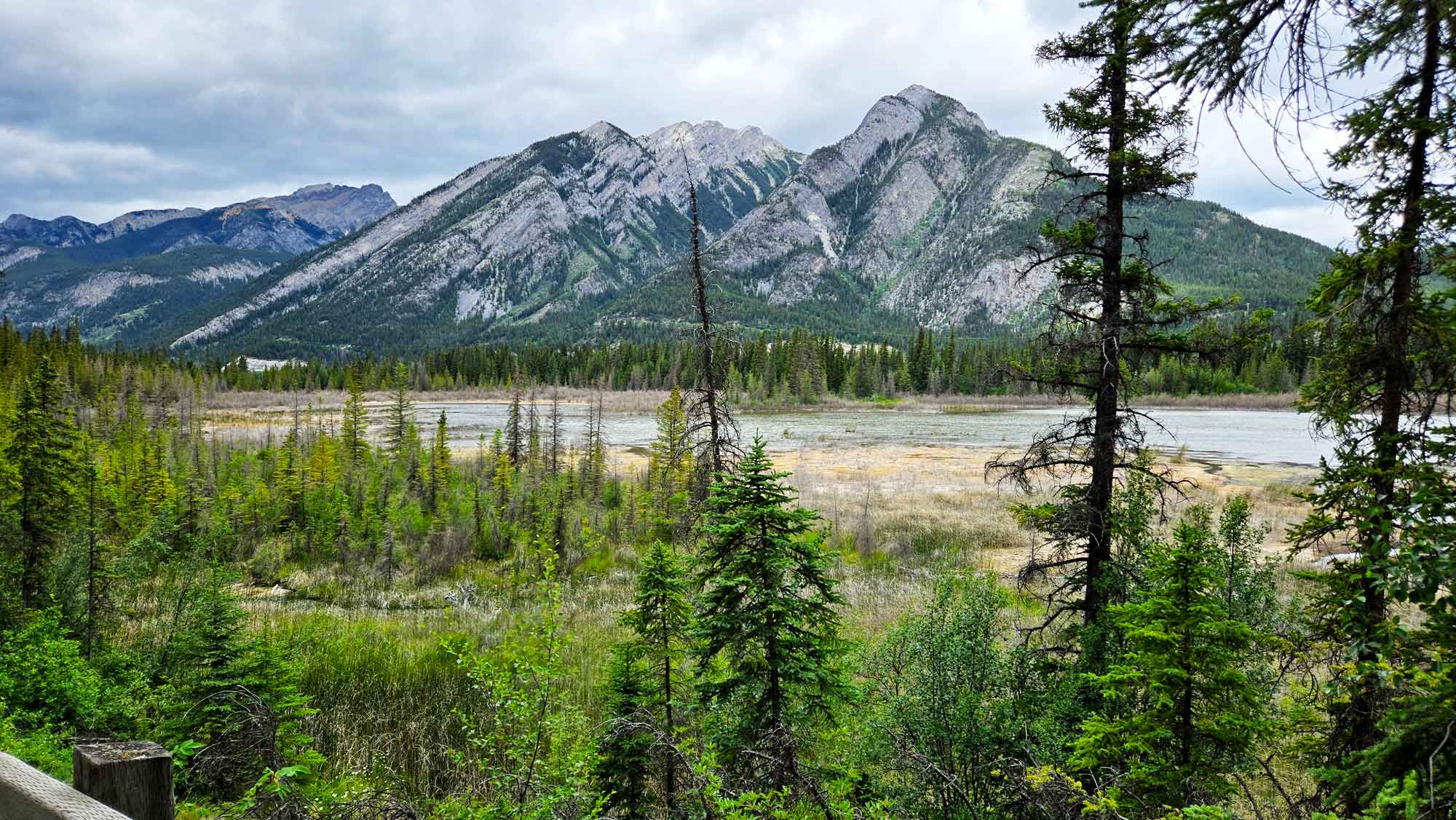
The warm waters prevent the deep frost of winter.
The aquatic species are also unique to this area. The Banff longnose dace is a minnow that exists in these warm waters, and nowhere else on Earth. They’re an endangered species, and that’s partly due to other fish species invading their space. In the 1960s, tropical fish and aquarium plants were released into the hot spring runoff to see if they could survive. Many of them did, and they reproduced. Species such as mosquitofish, jewelfish, and sailfin molly still exist in the warm water oasis.
The marshlands are also one of the few places to see garter snakes in Banff. These snakes are harmless and non-poisonous. They don’t like the short, cold summers of the Rockies, so they're rarely seen too far away from the natural hot springs.
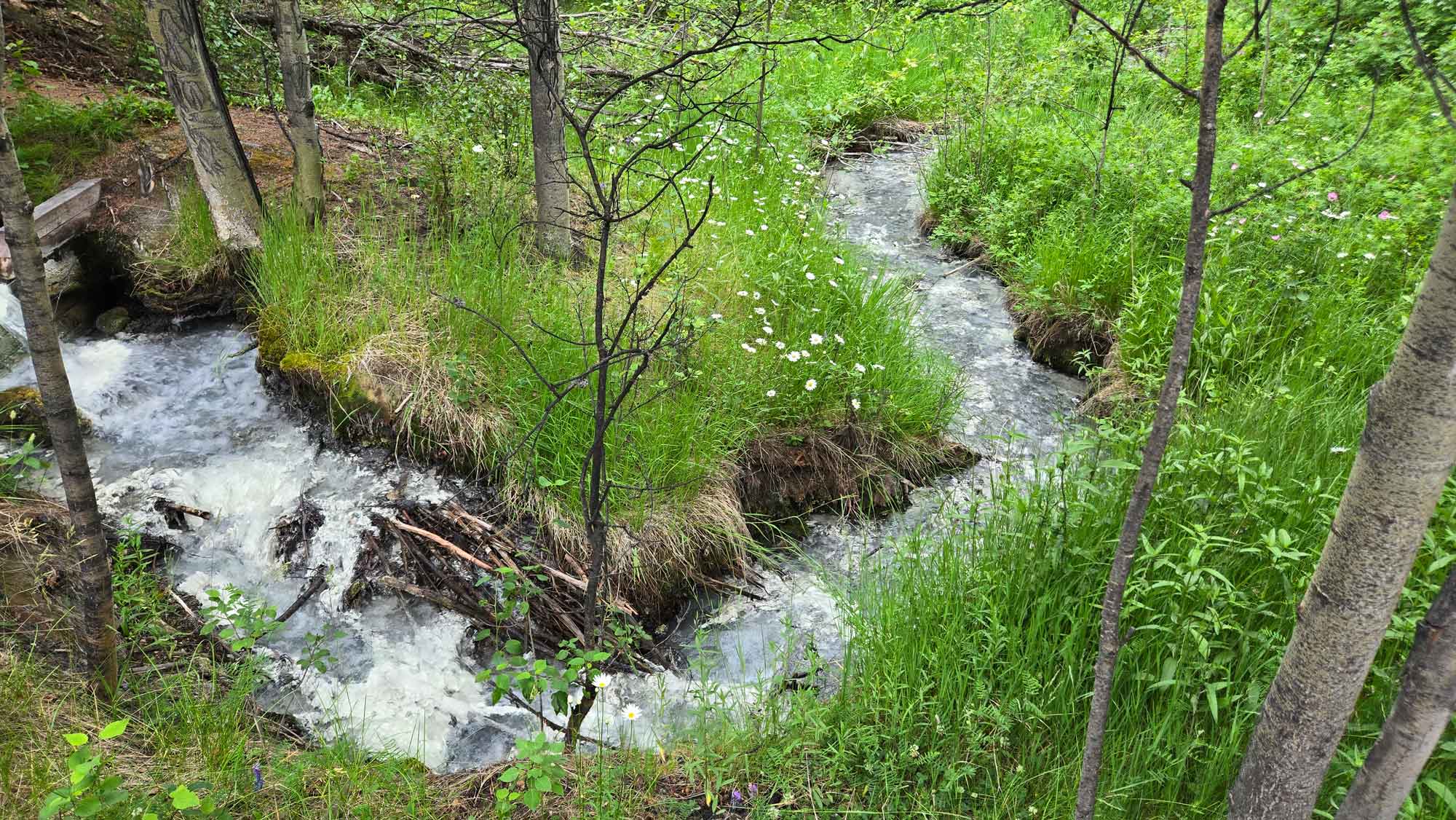
This special area drew the attention of people for thousands of years.
It’s no wonder this special area drew the attention of people for thousands of years, and eventually started the national park system in Canada. Visit the Cave & Basin to learn more about how Banff came to be, and take a stroll along the Marsh Boardwalk for a short and sweet interpretative trail. Look for unique plants, birds, and fish along the trail and at the observation platforms. Take a moment and explore the warmer side of mountain life.